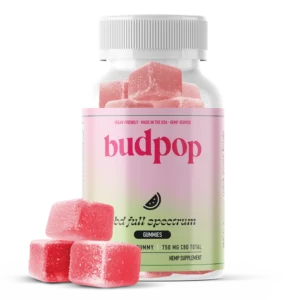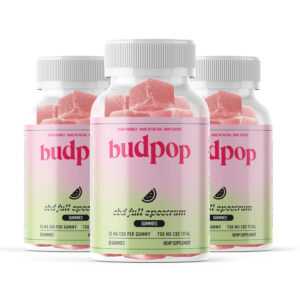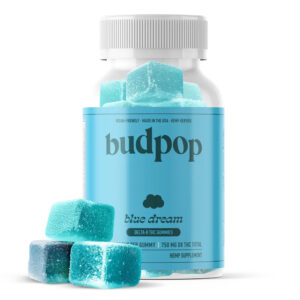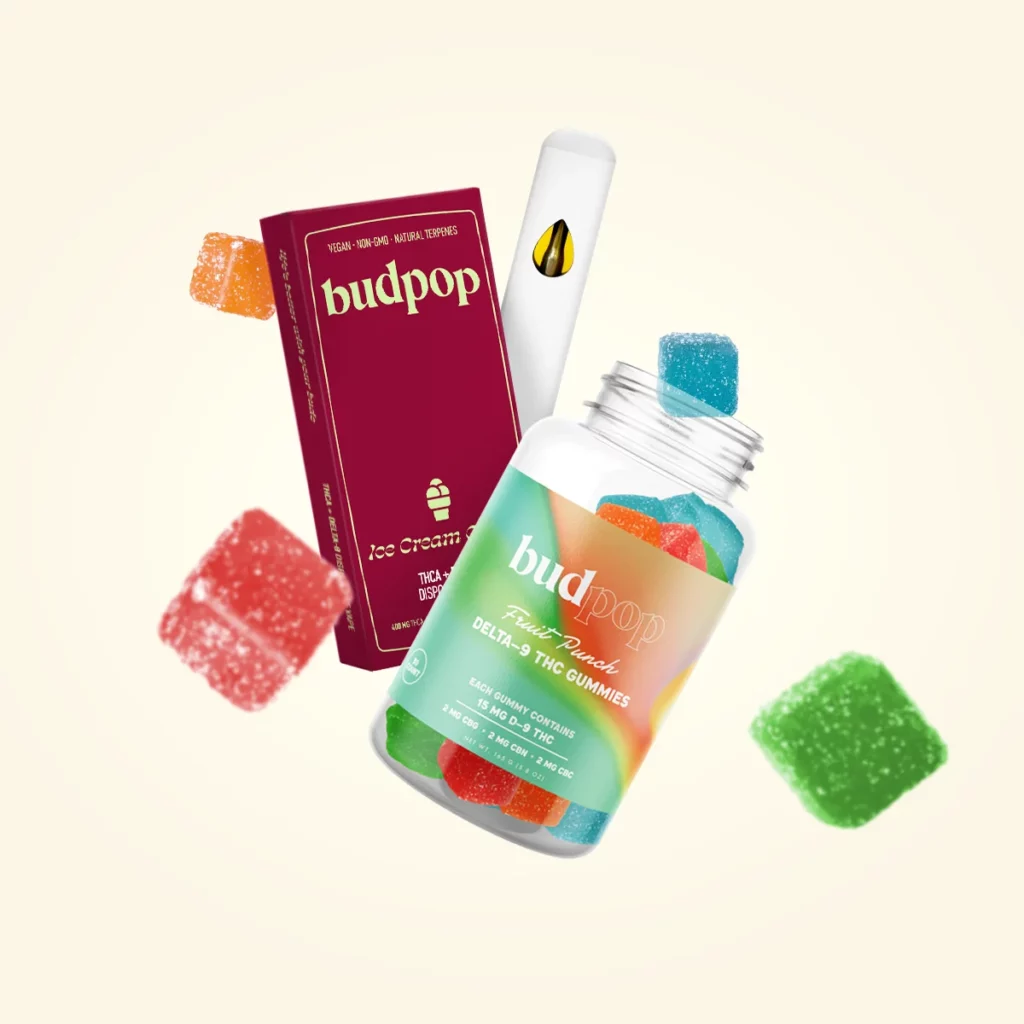

THC gummies deliver the psychoactive and therapeutic effects of tetrahydrocannabinol in a pre-dosed, portable, lung-friendly format. They’re the most popular way to consume cannabis edibles for good reason: precise dosing, long-lasting effects, no smoke or vapor, and a taste that doesn’t remind you you’re eating a hemp product.
The benefits split into two categories. There are the benefits of THC itself (relaxation, mood support, discomfort relief, sleep support) and the benefits of the gummy format (convenience, dosing precision, duration, discretion). This guide covers both, with the research behind each claim and the specific BudPop products that match each use case.
THC gummies benefits at a glance
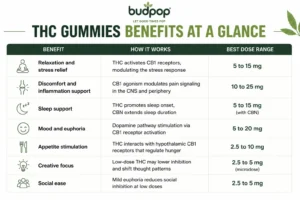
| Benefit | How it works | Best dose range |
|---|---|---|
| Relaxation and stress relief | THC activates CB1 receptors, modulating the stress response | 5 to 15 mg |
| Discomfort and inflammation support | CB1 agonism modulates pain signaling in the CNS and periphery | 10 to 25 mg |
| Sleep support | THC promotes sleep onset, CBN extends sleep duration | 5 to 15 mg (with CBN) |
| Mood and euphoria | Dopamine pathway stimulation via CB1 receptor activation | 5 to 20 mg |
| Appetite stimulation | THC interacts with hypothalamic CB1 receptors that regulate hunger | 2.5 to 10 mg |
| Creative focus | Low-dose THC may lower inhibition and shift thought patterns | 2.5 to 5 mg (microdose) |
| Social ease | Mild euphoria reduces social inhibition at low doses | 2.5 to 5 mg |
For detailed dosing guidance, see our THC gummies dosage chart.
The therapeutic benefits of THC
Every benefit below starts with the same mechanism: THC interacts with CB1 and CB2 receptors in your endocannabinoid system (ECS), a network of receptors that helps regulate mood, pain perception, sleep, appetite, immune response, and stress. Your body already produces its own cannabinoids (called endocannabinoids) that bind to these receptors. THC mimics them, but with stronger binding affinity.
Relaxation and stress relief
THC’s interaction with CB1 receptors in the amygdala and prefrontal cortex helps modulate the body’s behavioral and hormonal responses to acute stress. At low to moderate doses, this produces a sense of calm that most users describe as tension melting away.
The dose matters here. Research consistently shows that low-dose THC (5 to 10 mg) reduces stress, while high doses can actually increase anxiety in some people. This is one reason gummies are well-suited for stress relief: the pre-measured dose makes it easy to stay in the effective range.
Worth noting: THC is not a treatment for clinical anxiety disorders. If you have a diagnosed anxiety condition, talk to your doctor before using THC products. For everyday stress and the general need to decompress after a long day, many users find gummies highly effective.
Discomfort and inflammation support
THC acts as a CB1 agonist that modulates pain signaling in both the central nervous system and peripheral nerve cells. A systematic review of 13 randomized controlled trials found that oral THC products produced moderate analgesic effects for chronic neuropathic pain conditions, with a relatively safe side-effect profile and few severe adverse events.
The CAMS study (630 patients with MS-related spasticity) found that patients taking oral THC reported a 60% reduction in spasticity and pain compared to placebo.
This doesn’t mean THC gummies are a pain medication. The clinical evidence shows modest analgesic effects that vary by pain type, and the research is still evolving. What it does mean is that the mechanism is real and documented, and many users with everyday discomfort (muscle soreness, tension headaches, joint stiffness) find meaningful relief from THC gummies where over-the-counter options fall short.
The long-lasting nature of edibles (4 to 8 hours) is a practical advantage here. A single gummy can carry you through the workday or through the night without needing to redose.
Sleep support
THC influences the sleep-wake cycle through CB1 receptor activity in the hypothalamus. Multiple clinical trials evaluating cannabinoid therapies for chronic pain have also reported improvements in sleep quality as a secondary outcome.
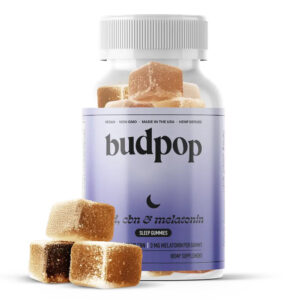
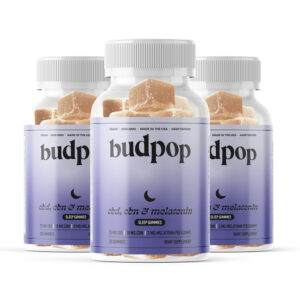
THC alone can help you fall asleep faster, but it’s the combination with CBN (cannabinol) that seems most effective for staying asleep. CBN is a mildly sedating cannabinoid that amplifies THC’s sleep-promoting properties. BudPop’s Delta-9 + CBN sleep gummies are specifically formulated for this purpose.
One consideration: long-term nightly use of THC for sleep can build tolerance and may reduce REM sleep duration. If you use THC gummies for sleep regularly, scheduling off-nights (2 to 3 per week) can help maintain effectiveness. For a deeper look, see CBN dosage for sleep.
Mood and euphoria
This is the benefit most people associate with THC. The CB1 receptor activation triggers dopamine release, producing the euphoria, warmth, and general sense of well-being that cannabis is known for.
The character of the mood shift depends on the dose, the cannabinoid profile, and the terpene blend. Low doses (2.5 to 5 mg) tend to produce a subtle, functional mood lift. Standard doses (5 to 15 mg) bring more noticeable euphoria and relaxation. Higher doses intensify everything, including the risk of anxiety or paranoia in sensitive individuals.
Full-spectrum gummies (containing multiple cannabinoids and terpenes) tend to produce a more nuanced, well-rounded mood effect than isolate-based gummies. This is the entourage effect in practice. Live resin gummies preserve the plant’s natural terpene profile, which shapes how the mood shift feels.
Appetite stimulation
THC is the most effective legal appetite stimulant available. It activates CB1 receptors in the hypothalamus, the brain region that controls hunger and satiety signals. This is the “munchies” effect, and it’s well-documented in clinical settings (synthetic THC, dronabinol, has been FDA-approved for appetite stimulation in certain patient populations since 1985).
For most recreational users, this is a side effect to manage. For people dealing with reduced appetite from medical treatments, chronic illness, or simply not eating enough, it can be a genuine benefit.
Creative focus and social ease
At microdose levels (1 to 5 mg), THC can lower mental inhibition and shift thought patterns without producing significant impairment. Some users report enhanced creativity, more fluid conversation, and a willingness to approach tasks from new angles.
This isn’t a universal effect. THC affects cognitive function differently depending on the person, the dose, and the task. But the microdosing approach has gained significant popularity among professionals and creatives who want a subtle edge without getting high. BudPop’s D9 + Caffeine gummies combine a low THC dose with caffeine for a functional daytime option.
Why gummies over other consumption methods
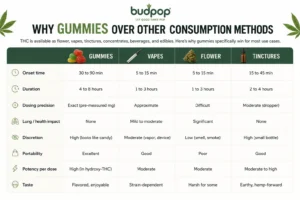
THC is available as flower, vapes, tinctures, concentrates, beverages, and edibles. Here’s why gummies specifically win for most use cases.
| Gummies | Vapes | Flower | Tinctures | |
|---|---|---|---|---|
| Onset time | 30 to 90 min | 5 to 15 min | 5 to 15 min | 15 to 45 min |
| Duration | 4 to 8 hours | 1 to 3 hours | 1 to 3 hours | 2 to 4 hours |
| Dosing precision | Exact (pre-measured mg) | Approximate | Difficult | Moderate (dropper) |
| Lung health impact | None | Mild to moderate | Significant | None |
| Discretion | High (looks like candy) | Moderate (vapor, device) | Low (smell, smoke) | High (small bottle) |
| Portability | Excellent | Good | Poor | Good |
| Potency per dose | High (11-hydroxy-THC) | Moderate | Moderate | Moderate to high |
| Taste | Flavored, enjoyable | Strain-dependent | Harsh for some | Earthy, hemp-forward |
The unique potency advantage of gummies comes from liver metabolism. Your liver converts delta-9 THC into 11-hydroxy-THC, a metabolite that crosses the blood-brain barrier more efficiently than inhaled THC. This is why 10 mg in a gummy can feel stronger than 10 mg from a vape, even though the THC amount is identical.
The trade-off is onset time. If you need immediate relief, vape cartridges or flower are faster. But for sustained, predictable effects over several hours, gummies are hard to beat. If gummies haven’t worked for you in the past, check our guide on why THC gummies don’t work before writing them off.
Choosing the right gummy for your goal
BudPop formulates gummies for specific use cases, not just generic THC delivery. Here’s a practical guide.
For sleep: Delta-9 + CBN sleep gummies combine THC with CBN for faster onset of sleep and longer sleep duration. Take one gummy 60 to 90 minutes before bed.
For daytime energy and focus: D9 + Caffeine gummies pair a low THC dose with caffeine for functional productivity without sedation.
For deep relaxation: Delta-9 THC gummies in standard doses (10 to 25 mg) provide the classic, full-body THC experience.
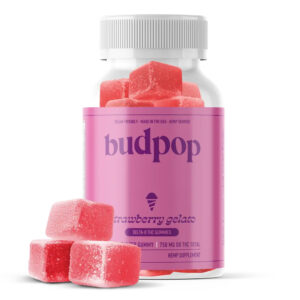
For a milder experience: Delta-8 THC gummies produce roughly half the intensity of delta-9, with less anxiety and paranoia risk. Good for users who find delta-9 too intense.
For maximum potency: THCP gummies contain a cannabinoid with significantly higher CB1 receptor affinity than delta-9. Experienced users only.
For full-spectrum terpene experience: Live resin gummies and live rosin gummies preserve the plant’s natural terpene profile for a more nuanced high.
For intimacy: BudPop offers libido gummies for men and libido gummies for women combining THC with supportive cannabinoids.
Side effects to know about
THC gummies are generally well-tolerated, but side effects are real and dose-dependent.
Common at moderate doses: dry mouth, red eyes, increased appetite, mild drowsiness, slowed reaction time.
Possible at higher doses: anxiety, paranoia, dizziness, nausea, temporary cognitive impairment.
Rare but documented: elevated heart rate, disorientation, panic-like episodes (almost always from overconsumption).
Clinical data from cannabinoid pain trials report that dizziness occurs in approximately 15 to 20% of THC users, sedation in 10 to 15%, and nausea in 8 to 12%. These rates are dose-dependent and typically resolve on their own.
The most effective way to minimize side effects is to dose correctly. Start at 5 mg or less if you’re new to edibles, wait two full hours before considering more, and increase in 5 mg increments across sessions.
Do not drive or operate machinery after consuming THC gummies. Do not use if you’re pregnant, breastfeeding, under 21, or taking medications that interact with the CYP450 enzyme system (blood thinners, certain antidepressants, antiepileptics). If you take prescription medications, consult your doctor first.
Full-spectrum vs. isolate: why it matters
Not all THC gummies contain the same extract type, and the difference shapes your experience.
THC isolate gummies contain only the THC molecule. No other cannabinoids, no terpenes, no flavonoids. The high tends to be one-dimensional and shorter-lived.
Full-spectrum gummies contain the plant’s natural range of compounds: THC alongside CBD, CBG, CBN, CBC, plus terpenes and flavonoids. These compounds interact synergistically through the entourage effect, producing a more complex, well-rounded experience at the same milligram dose.
Live resin and live rosin gummies go a step further. They’re made from flash-frozen cannabis that preserves the volatile terpenes normally lost during drying. The result is the closest thing to the living plant’s chemical profile in edible form. For a deeper comparison, see our guide on live resin vs cured resin.
BudPop uses full-spectrum, hemp-derived extracts. Every batch is third-party lab tested for potency and purity, with Certificates of Analysis published on the lab testing page.
Legal status in 2026
Hemp-derived THC gummies containing less than 0.3% delta-9 THC by dry weight are federally legal under the 2018 Farm Bill. All BudPop gummies comply with this standard.
One important update: the Continuing Appropriations Act, 2026 (signed November 12, 2025) redefines hemp starting November 12, 2026, with new total-THC testing requirements and restrictions on synthetically derived cannabinoids. These changes primarily affect delta-8 and other converted cannabinoids. Delta-9 THC products from hemp that meet the 0.3% threshold remain legal under current law.
State laws vary. A handful of states restrict or ban hemp-derived THC products regardless of federal legality. Check your state’s specific regulations before purchasing.
These statements have not been evaluated by the FDA. These products are not intended to diagnose, treat, cure, or prevent any disease. Consult your physician before use. You must be 21 or older to purchase.
Frequently asked questions
Are THC gummies better than smoking?
For most users, yes. Gummies avoid all respiratory risks associated with smoking, deliver longer-lasting effects (4 to 8 hours vs 1 to 3 hours), and provide exact dosing. The trade-off is a slower onset (30 to 90 minutes vs immediate). If you need fast-acting relief, vaping is quicker. For sustained effects with no lung involvement, gummies are the better format.
How long do THC gummy effects last?
Typically 4 to 8 hours, depending on your dose, metabolism, and whether you ate them on a full or empty stomach. Peak effects usually hit between 90 minutes and 3 hours after consumption. Higher doses and slower metabolisms extend the duration.
Can I take THC gummies every day?
Many people use low-dose THC gummies daily for stress or sleep. The main concern with daily use is tolerance buildup, which means you’d need more milligrams over time for the same effect. Scheduling 2 to 3 off-days per week helps manage tolerance. If you take prescription medications, consult your doctor about potential CYP450 enzyme interactions.
Do THC gummies help with anxiety?
At low doses (2.5 to 5 mg), many users report reduced anxiety and a calmer mental state. At higher doses, THC can increase anxiety and paranoia, especially in people prone to it. The relationship between THC and anxiety is dose-dependent and individual. THC gummies are not a substitute for professional mental health treatment.
What’s the difference between delta-8 and delta-9 gummies?
Delta-9 is the standard THC, stronger per milligram and more widely studied. Delta-8 is roughly half as potent, with a reputation for producing less anxiety at equivalent effect levels. Both are available from BudPop. For a full comparison, see does delta 8 get you high.
Are THC gummies legal?
Hemp-derived THC gummies under 0.3% delta-9 THC by dry weight are federally legal in the U.S. under the 2018 Farm Bill. State laws vary, and the November 2026 hemp law update may affect some product categories. BudPop ships to all states where hemp-derived THC products are permitted.
Can THC gummies help with pain?
Clinical evidence suggests THC has modest analgesic properties, particularly for neuropathic pain. A systematic review of 13 RCTs found moderate pain reduction from oral THC products. For everyday discomfort (sore muscles, tension, joint stiffness), many users report meaningful relief. THC gummies are not a replacement for prescribed pain management, and the research is still evolving.
What should I look for when buying THC gummies?
Third-party lab testing (with published COAs), full-spectrum extraction rather than isolate, clear labeling of THC content per gummy in milligrams, and U.S.-grown hemp. Avoid products without lab results, vague “proprietary blend” labels, or brands that don’t disclose the cannabinoid type (delta-8 vs delta-9).