
Yes. Delta 8 THC is psychoactive, and it will get you high. But the high is milder than what you’d get from delta-9 THC (the compound most people mean when they say “THC” or “weed”). Think of it as a lighter, calmer version of a traditional cannabis high. You stay functional. Most people don’t feel anxious or paranoid. And the intensity depends on your product, your dose, and your body.
That’s the short version. The longer version covers what the high actually feels like, onset times by product type, duration, delta-9 comparisons, side effects, drug testing, and what the 2026 federal law changes mean for delta-8 buyers.
How does delta-8 get you high feeling?
Most delta-8 users describe the experience as relaxed and clear-headed, with a gentle euphoria underneath. You feel calm without feeling couch-locked. Some people report a boost in focus or creativity. Others say it feels like a weight lifted off their shoulders.
The key difference from delta-9? You’re less likely to feel foggy, jittery, or anxious. Delta 8 binds to the CB1 receptors in your brain (the ones responsible for psychoactive effects), but with less intensity than delta-9 does. It also interacts with CB2 receptors, which don’t produce a “high” at all. They’re linked to immune response and inflammation.
Your endocannabinoid system (ECS), the internal network of receptors that regulates sleep, mood, pain, and immune function, processes delta-8 differently than delta-9. That weaker CB1 bond is why the high feels smoother.
One important thing: effects vary from person to person. Your body weight, metabolism, tolerance, and even what you ate that day all influence the experience. Two people taking the same gummy can have noticeably different highs.
How long does it take delta 8 to kick in?
Onset time depends almost entirely on your consumption method.
Gummies and edibles
Delta-8 gummies typically take 1 to 2 hours to kick in. Other edibles (cookies, brownies) can take longer, sometimes 2 to 3 hours, because your digestive system has to break them down before the delta-8 reaches your bloodstream. Effects usually peak around 3 to 4 hours after you eat them.
Eating edibles on a full stomach slows things down even more. On an empty stomach, you’ll feel it faster, but the intensity can also spike.
Vaping and smoking
Inhaling delta 8 through a vape cartridge or flower gets it into your lungs and then directly into your bloodstream. You’ll feel the effects within 5 to 15 minutes. Peak hits around 30 minutes.
This is the fastest delivery method, which makes it easier to control your dose in real time. Take a puff, wait 15 minutes, and see how you feel before taking another.
Tinctures
When you hold a delta-8 tincture under your tongue for 30 to 45 seconds, the mucous membranes absorb the compound directly. Effects usually start within 30 to 45 minutes and peak around 1.5 hours.
Tinctures are a middle ground between edibles and vaping. Faster than gummies, slower than a vape, and easier to dose precisely with a dropper.
How long does a delta-8 high last?
Again, it depends on the method:
Edibles and gummies: The longest-lasting option. The high can stick around for 4 to 8 hours. Gummies tend to start wearing off about 1 to 2 hours after the peak. Cookies and baked goods can linger even longer because of how slowly they metabolize.
Vaping and smoking: Faster in, faster out. The high peaks at about 30 minutes and lasts 2 to 5 hours total.
Tinctures: Somewhere in between. Expect 3 to 5 hours of effects.
Your tolerance plays a role here too. If you use delta 8 regularly, the same dose might feel shorter and milder than it did when you started.
What to expect as a beginner vs. an experienced user
If you’ve never used THC before
Your first time with delta-8 will probably feel more intense than what experienced users describe. The euphoria and appetite boost are amplified when your body has never processed THC before. You have no built-up tolerance and no baseline to compare against.
Start low. Stay somewhere comfortable. Don’t drive or operate machinery. And give yourself enough time to ride out the full duration. A social setting with people you trust is ideal for a first experience.
If you’re used to THC products
You already know what a cannabinoid high feels like, so delta-8 won’t catch you off guard. The effects will be noticeably milder than delta-9 marijuana. You probably won’t feel stoned or mentally clouded.
The reason: delta-8 has a weaker bond with CB1 receptors compared to delta-9 THC. If you’ve built a tolerance to delta-9, you’ll likely need a higher dose of delta-8 to feel significant effects. Many experienced users prefer delta-8 specifically because it provides a functional, energized calm without the sedation that comes with stronger THC.
Delta 8 vs. delta 9: how the highs compare
Delta-8 and delta-9 are both forms of THC. They share a nearly identical molecular structure. The only difference is where the double bond sits on the carbon chain: eighth carbon for delta-8, ninth carbon for delta-9.
That single position change matters. Delta-9 binds more tightly to CB1 receptors, which is why it produces a stronger high. Users typically describe delta-9 as more intense and euphoric, sometimes accompanied by laughter and deep relaxation, but also potentially by anxiety and paranoia at higher doses.
Delta-8 users, by contrast, tend to report feeling good while still being able to work, carry on conversations, and handle daily tasks. The trade-off is a less dramatic high.
Here’s the practical comparison:
| Delta-8 THC | Delta-9 THC | |
|---|---|---|
| High intensity | Mild to moderate | Moderate to strong |
| Anxiety/paranoia risk | Low | Moderate to high |
| CB1 receptor binding | Weaker | Stronger |
| Functional during use? | Usually yes | Depends on dose |
| Legal status (federal, pre-Nov 2026) | Legal under 2018 Farm Bill | Federally illegal (Schedule I) |
| Drug test | Will show as THC | Will show as THC |
One thing that hasn’t changed: both delta-8 and delta-9 metabolize into 11-hydroxy-THC in your liver. Drug tests look for this metabolite. They can’t tell the difference between the two. If you use delta-8, you will likely test positive for THC.
Will delta 8 show up on a drug test?
Yes. This is the part a lot of delta-8 content skips, and it shouldn’t be skipped.
Standard urine drug tests screen for THC-COOH, a metabolite your liver produces when it processes any form of THC. Delta-8 and delta-9 both create this metabolite. The test can’t distinguish between them.
Detection windows vary by usage pattern:
| Usage level | Urine detection window |
|---|---|
| Single use | 3 to 5 days |
| Occasional (a few times per week) | 5 to 7 days |
| Daily use | 10 to 15 days |
| Heavy daily use | Up to 30 days (sometimes longer) |
Other test types:
- Blood: 24 to 48 hours
- Saliva: Up to 24 hours (sometimes 3 days)
- Hair follicle: Up to 90 days
If you have a drug test coming up, delta-8 is not a safe workaround. The “legal” status of the product doesn’t matter to the test. Your body processes it the same way it processes marijuana.
Delta-8 side effects
Delta 8 is milder than delta 9, but “milder” isn’t the same as “side-effect-free.” Common side effects include:
- Dry mouth (the most reported side effect across all cannabinoids)
- Red or dry eyes
- Increased appetite (the classic “munchies”)
- Drowsiness at higher doses
- Lightheadedness, especially if you stand up too fast
- Mild anxiety in rare cases, usually at higher-than-recommended doses
The FDA has flagged more serious concerns as well. Between December 2020 and February 2022, the agency received 104 adverse event reports related to delta-8 products. Of those, 55% required medical intervention or hospital admission. Reported symptoms included hallucinations, vomiting, tremors, confusion, and loss of consciousness. National poison control centers logged over 2,300 delta-8 exposure cases during the same period.
Most of these incidents involved unregulated products with inconsistent potency or chemical contaminants from the manufacturing process. Delta-8 doesn’t occur naturally in large amounts in hemp. Most commercial delta-8 is converted from CBD using chemical processes, and the quality of that conversion varies wildly between manufacturers.
This is why sourcing matters. Products from brands that publish third-party lab results (called Certificates of Analysis, or COAs) are significantly safer than gas-station gummies with no testing behind them. BudPop publishes lab results for every batch.
Delta-8 dosing tips
There are no FDA-approved dosing guidelines for delta-8. But based on general industry consensus and user reports, here’s a reasonable starting framework:
| Experience level | Recommended dose |
|---|---|
| Beginner (no THC experience) | 5 to 10 mg |
| Occasional user (some THC experience) | 10 to 25 mg |
| Regular user (daily cannabinoid use) | 25 to 50 mg |
These numbers apply to edibles and tinctures. Vaping is harder to measure precisely. Each puff delivers roughly 1 to 3 mg. Start with 2 to 3 puffs and wait 15 to 20 minutes.
The biggest beginner mistake is redosing too early. Edibles can take up to 2 hours to kick in. If you eat a gummy, don’t take another one 45 minutes later because “nothing is happening yet.” Give it time.
A rough rule of thumb: delta-8 is about half as potent as delta-9 THC. So if you’re comfortable with a 10 mg delta-9 edible, you’d likely need around 20 mg of delta-8 for a similar experience.
Is delta 8 legal in 2026?
This is where it gets complicated, and where the information in most older delta-8 guides is now wrong.
The 2018 Farm Bill legalized hemp and all its derivatives, as long as the product contained less than 0.3% delta-9 THC by dry weight. Since the law only mentioned delta-9, manufacturers argued that delta-8 (a different compound) was legal by default. For several years, courts mostly agreed. The Ninth Circuit ruled in AK Futures v. Boyd Street Distro (2022) that hemp-derived delta-8 was protected under the Farm Bill.
That’s changing. On November 12, 2025, the Continuing Appropriations Act, 2026 was signed into law. It rewrites the federal definition of hemp. The key changes take effect November 12, 2026:
- The testing standard shifts from delta-9 THC only to total THC (all tetrahydrocannabinols, including delta-8, delta-10, THCA, HHC, and THCP, measured after decarboxylation)
- Synthetic and lab-converted cannabinoids (which includes most commercial delta-8) are explicitly excluded from the definition of hemp
- Products exceeding 0.4 mg of total THC per serving could be banned
The 2026 Farm Bill (H.R. 7567) passed the House on April 30, 2026, and it does not reverse these restrictions.
And more than a dozen states have already banned delta-8 outright, independent of federal law. Another group of states restricts it to licensed dispensaries.
Bottom line: If you’re buying delta-8, check your state’s current rules. What was legal in 2024 may not be legal in late 2026. Laws are actively shifting.
This section is for informational purposes only and does not constitute legal advice. Verify current regulations with your state’s controlled substances board or attorney general before purchasing any delta-8 product.
FAQs
Is delta 8 stronger than CBD?
Yes, significantly. CBD is non-psychoactive. You won’t feel a “high” from it at all. Delta 8 is a form of THC, so it produces real psychoactive effects: euphoria, relaxation, altered perception. Think of CBD as the calm-without-the-buzz option, and delta 8 as the mild-buzz option. They’re in the same plant family but do very different things in your brain.
How many delta-8 gummies should I take?
If you’ve never tried delta 8 before, start with half a gummy or one gummy (5 to 10 mg). Wait at least 90 minutes before deciding if you need more. The most common beginner mistake is eating a second gummy after 30 minutes because “nothing happened yet.” Edibles take time. Once you know how your body responds, you can adjust upward in small increments (5 mg at a time).
Can you drive after taking delta 8?
No. Delta 8 is psychoactive and impairs coordination, reaction time, and judgment. Driving under the influence of any THC product, including delta 8, is illegal in every state. Even if the high feels mild, your motor skills and decision-making are affected. Wait until the effects fully wear off (at least 4 to 8 hours for edibles, 3 to 5 hours for vapes) before getting behind the wheel.
Is delta 8 the same as weed?
Not exactly. “Weed” usually refers to marijuana, which is rich in delta-9 THC. Delta 8 is a different cannabinoid with a similar molecular structure but weaker psychoactive effects. Most commercial delta 8 comes from hemp-derived CBD, not from marijuana plants. The high is lighter, the anxiety risk is lower, and (until November 2026) the federal legal status is different.
Will delta 8 give me a hangover?
At normal doses, most users report no hangover. You might feel slightly groggy if you took a high dose of edibles late at night, but that’s more of a “sleep too heavily” effect than a true hangover. Staying hydrated helps. The grogginess, when it happens, usually clears within an hour or two of waking up.
Is delta 8 safe to use every day?
There’s no long-term clinical data on daily delta-8 use. Short-term, most adults tolerate it well at moderate doses. The bigger concern with daily use is tolerance buildup: over time, you’ll need more to feel the same effects. Many regular users take 1 to 2 days off per week to keep their effective dose low. If you’re on any prescription medications, talk to your doctor before using delta 8 regularly, because cannabinoids can interact with certain drugs (especially blood thinners and anti-anxiety medications).
How is delta 8 different from delta-10 or HHC?
All three are cannabinoids that produce a high, but the intensity and character differ. Delta 10 is generally considered the mildest of the three, with users reporting a more energizing, sativa-like buzz. Delta 8 sits in the middle: calmer than delta 10, lighter than delta 9. HHC (hexahydrocannabinol) feels closer to delta 9 in intensity. HHC goes through a chemical process called hydrogenation, which also makes it more shelf-stable. All three will trigger a positive on a standard THC drug test.
Does the strain of delta-8 product matter?
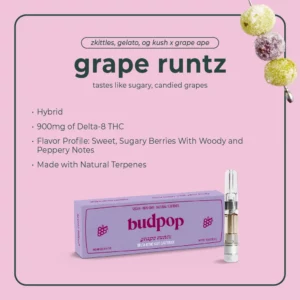
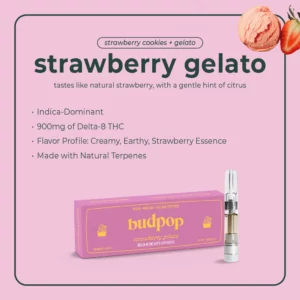
Yes. Delta-8 vape cartridges and flower products come in specific strains (like Grape Runtz or Strawberry Gelato), each with a different terpene profile. Terpenes influence the character of the high. Indica-leaning strains tend to feel more relaxing and sedating. Sativa-leaning strains lean toward energy and focus. Hybrids fall somewhere in between. The delta-8 itself is the same across strains; the terpenes are what shift the experience.
BudPop’s delta-8 products
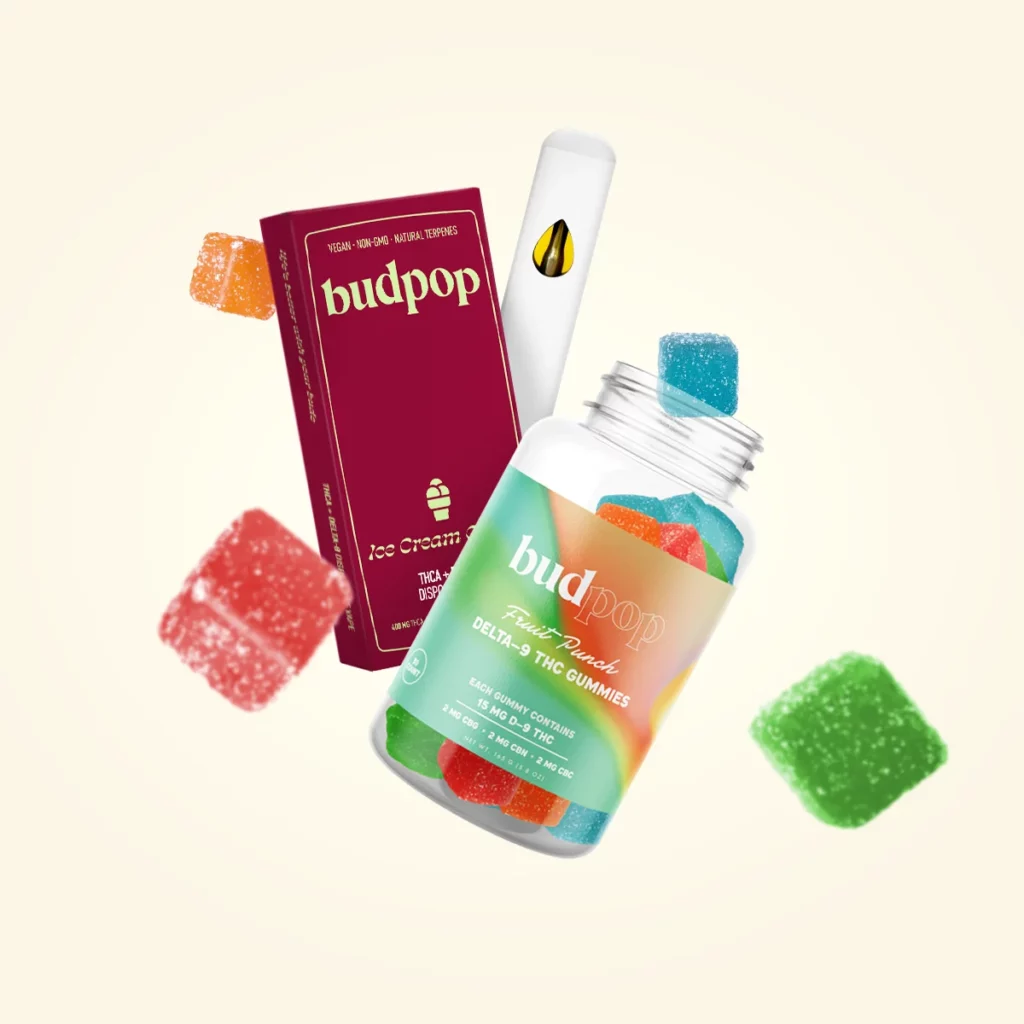
If you’re looking to try delta-8 from a brand that publishes lab results and uses third-party testing for every batch, here are BudPop’s main product lines:
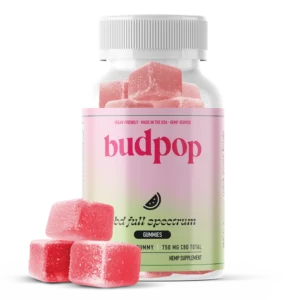
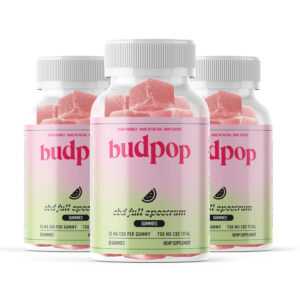
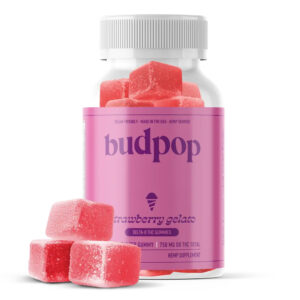
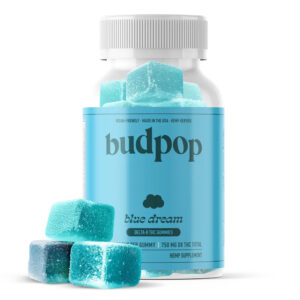
- Delta-8 gummies (available in Strawberry Gelato and Blue Dream Berry)
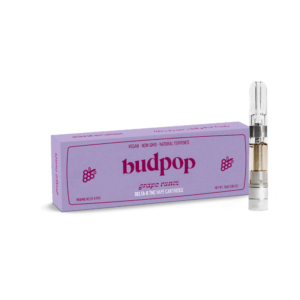
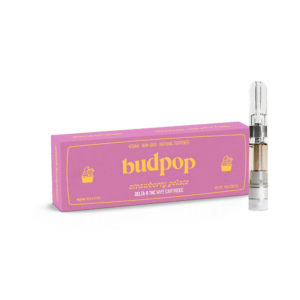
- Delta-8 vape cartridges (Grape Runtz, Strawberry Gelato, and more strains)
- Delta-8 disposable vape pens
All products ship with Certificates of Analysis and are made from U.S.-grown hemp. See the full lab testing page here.
These statements have not been evaluated by the FDA. These products are not intended to diagnose, treat, cure, or prevent any disease. Consult your physician before use. You must be 21 or older to purchase.




![Is THCA Legal in Georgia? [Major 2025 Update Explained] | BudPop](https://budpop.com/wp-content/uploads/2025/03/Is-thca-legal-in-Georgia-150x150.png "Is THCA Legal in Georgia? [Major 2025 Update Explained]")