Fact-Checked by: BudPop Editorial Team, Cannabis Industry Specialists
Disclaimer: This article is for informational purposes only and does not constitute medical advice. Blue lotus (Nymphaea caerulea) has not been approved by the FDA for the treatment of any medical condition. Consult a healthcare professional before using any botanical product, especially if you take prescription medications, are pregnant, or have a medical condition.
Legal Notice: Blue lotus is not a controlled substance in the United States. It is legal to cultivate, sell, and purchase in 49 states. It is banned in Louisiana. It is listed on the Department of Defense Prohibited Dietary Supplement Ingredients list. Verify local regulations before purchasing. You must be 21+ to purchase BudPop products.
Blue lotus is not a lotus. That’s the first thing worth clearing up.
The plant most people call “blue lotus” is Nymphaea caerulea, a water lily in the Nymphaeaceae family. True lotus belongs to the genus Nelumbo. The two plants look similar but are biologically distinct and contain different compounds. If a product label says “lotus” without specifying Nymphaea caerulea, you don’t actually know what you’re getting.
That distinction matters because the specific alkaloids in Nymphaea caerulea, apomorphine and nuciferine, are pharmacologically active compounds with documented receptor-level effects. This isn’t chamomile. It isn’t lavender. Blue lotus contains molecules that interact with dopamine and serotonin receptors in measurable, specific ways.
Ancient Egyptians knew the effects without understanding the chemistry. Modern science can now explain exactly what those alkaloids do to your brain. Here’s what we know.
Blue Lotus in Ancient Egypt: 4,000 Years of Documented Use
Depictions of Nymphaea caerulea appear on Egyptian papyri and tomb walls dating to the 14th century BCE. The flower was sacred. It appeared in artwork associated with the sun god Ra (the lotus opens at dawn and closes at dusk), the goddess Isis, and the god Nefertem, who was depicted wearing a blue lotus crown and represented healing.
The Egyptians used blue lotus in religious ceremonies, funeral rites, and social gatherings. The flower was steeped in wine for celebrations, including the Festival of Drunkenness held in honor of Hathor. Historical texts describe it as an entheogenic substance, a term that means “generating the divine within,” used in place of “hallucinogenic” because the flower’s effects are subtle and consciousness-expanding rather than disorienting.
Blue lotus has also appeared in Hindu spiritual traditions, where it symbolizes divine beauty and is associated with the god Vishnu. In Buddhist symbolism, it represents wisdom and knowledge.
This isn’t a plant that became trendy on social media. It has 4,000 years of continuous documented use across multiple civilizations.
The Two Alkaloids That Make Blue Lotus Work
Most articles about blue lotus mention apomorphine and nuciferine in passing. Few explain what they actually do at the receptor level. Understanding the pharmacology is what separates real knowledge from marketing language.
Apomorphine
Apomorphine is a non-selective dopamine receptor agonist. It also activates serotonin receptors (partial agonist at 5-HT1A, antagonist at 5-HT2A) and alpha-adrenergic receptors.
In plain language: it stimulates the same receptors in your brain that regulate mood, reward, and motor control. The result is a feeling of contentedness, ease, and subtle euphoria. Not a “high” in the way THC or alcohol produce one. More like the satisfaction of finishing a long day and sitting down with nothing left to do.
Apomorphine isn’t obscure in medicine. It was used clinically for insomnia and depression treatment in the late 1800s. Today, it’s an FDA-approved treatment for Parkinson’s disease (administered by injection under the brand name Apokyn) and has been prescribed in Europe for erectile dysfunction. It is the oldest antiparkinsonian drug still in use.
The apomorphine in blue lotus is present at far lower concentrations than a clinical injection. At gummy or tea doses, it contributes to a gentle mood lift and mental calm, not a pharmaceutical-grade dopamine surge.
Nuciferine
Nuciferine is where blue lotus gets interesting from a pharmacological standpoint.
A 2016 study published in PLOS One (Farrell et al.) mapped nuciferine’s complete receptor profile:
- Antagonist at 5-HT2A, 5-HT2C, and 5-HT2B receptors
- Inverse agonist at 5-HT7
- Partial agonist at D2, D5, and 5-HT6 receptors
- Agonist at 5-HT1A and D4 receptors
- Inhibits the dopamine transporter
- Its metabolite, atherosperminine, has additional dopaminergic agonist properties
This receptor profile is unusually broad for a plant compound. Researchers have noted nuciferine’s potential as an antipsychotic agent based on its receptor activity pattern, though no human clinical trials have been conducted for this use.
For sleep specifically, nuciferine’s 5-HT2A antagonism is the critical mechanism. The 5-HT2A receptor plays a direct role in regulating REM sleep, the phase where dreaming occurs. Modulating this receptor is associated with enhanced dream vividness and improved dream recall. This is why blue lotus users consistently report more vivid, colorful, emotionally rich dreams, an effect no other common sleep aid (melatonin, CBN, CBD, valerian, chamomile) can replicate.
Nuciferine also has a high safety margin. Its median lethal dose in mice is 289 mg/kg, which translates to an extremely wide gap between a therapeutic dose and a harmful one.
How They Work Together
Apomorphine and nuciferine interact with dopamine in seemingly contradictory ways. Apomorphine stimulates dopamine receptors; nuciferine blocks excessive stimulation at certain subtypes while activating others. The net effect is a balanced state: alert enough to be present, calm enough to let go of racing thoughts. Users describe it as being in a “better mood without trying.”
This balance is why blue lotus doesn’t feel like a sedative. It doesn’t knock you out. It creates the mental conditions under which your body’s natural sleep drive can do its job.
What Blue Lotus Actually Feels Like
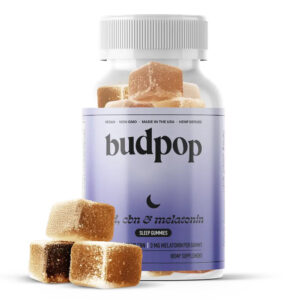
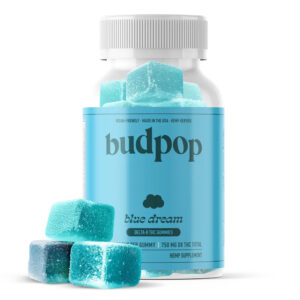
We’ve tested blue lotus in multiple formats across our product development process. Here’s what the experience looks like when consumed as a gummy (which is how most people encounter it now):
15 to 30 minutes: Nothing obvious. The compounds are absorbing through the digestive tract. If the product uses nano-formulation (like our Dream Gummies), this window compresses to 15 to 20 minutes.
30 to 45 minutes: A subtle shift. You notice your jaw was clenched and it isn’t anymore. Your shoulders drop slightly. Thoughts are still there, but they’ve lost their urgency.
45 to 60 minutes: The “better mood without trying” phase. The mental volume drops from an 8 to a 4. You don’t feel drugged or drowsy. You feel present and quiet.
60 to 90 minutes: If you’re in bed, sleep arrives without effort. No “trying to fall asleep.” Your body’s natural sleep drive takes over because your mind stopped interfering.
Morning: Clear-headed. No grogginess. No foggy first hour. This is the part that separates blue lotus from melatonin for many users.
The effects of blue lotus are dose-dependent. At lower doses (100 to 200mg of extract), the calming effects are mild. At standard gummy doses (300mg, like Dream Gummies), the relaxation is noticeable. At very high doses (particularly when smoked or vaped), blue lotus can produce mild perceptual changes, including a dream-like state and subtle visual enhancement. A case series published in Military Medicine (Schimpf et al., 2023) documented five military patients who experienced altered mental status after using blue lotus products, primarily through vaping at concentrated doses. All were managed with supportive care and recovered without complications.
The takeaway: at gummy and tea doses, blue lotus produces gentle relaxation. The risks documented in medical literature are associated with high-dose vaping and concentrated extracts, not standardized oral products.
Blue Lotus vs Other Sleep Botanicals: It’s Not the Same Category
Blue lotus is frequently grouped with chamomile, valerian, passionflower, and lavender as a “calming herb.” This grouping is misleading.
Chamomile contains apigenin, a mild flavonoid with weak GABA modulation. Its calming effect is real but modest. No documented receptor-level psychoactive activity.
Valerian interacts with GABA receptors. Research results are inconsistent. Some studies show mild sleep benefits; others show no difference from placebo. Strong smell, inconsistent standardization.
Passionflower modulates GABA pathways. Modest evidence for mild anxiety reduction. No dopamine or serotonin receptor activity.
Blue lotus contains apomorphine (dopamine agonist, serotonin modulator) and nuciferine (5-HT2A antagonist, dopamine transporter inhibitor, D2/D5 partial agonist). These are identified alkaloids with specific, published receptor profiles from peer-reviewed research.
The difference is precision. Chamomile, valerian, and passionflower have “traditional use” with vague mechanisms. Blue lotus has named compounds with mapped receptor interactions. When you take blue lotus, we can point to exactly which receptors nuciferine binds to and at what affinity. That level of pharmacological specificity puts blue lotus in a different category entirely.
Why We Paired Blue Lotus With Cannabinoids in Dream Gummies
Blue lotus calms the mind. But insomnia has two halves: a racing mind AND a restless body. Blue lotus addresses the first half through dopamine and serotonin modulation. It doesn’t directly sedate the body.
That’s where cannabinoids come in.
CBN (cannabinol) activates CB1 receptors in the endocannabinoid system, producing physical sedation. A 2025 meta-analysis in Sleep Medicine Reviews confirmed that THC and CBN are the cannabinoids that drive sleep benefits, not CBD alone. Low-dose THC (2mg in Dream Gummies) adds a subtle thought-quieting effect at a sub-psychoactive level.
The result: three biological pathways addressing sleep simultaneously.
- Blue Lotus (300mg) calms the mind through dopamine/serotonin
- CBN (10mg nano) sedates the body through the endocannabinoid system
- THC (2mg nano) quiets the inner monologue without a “high”
- CBG (10mg) releases physical tension through muscular relaxation
No other sleep product on the market combines a botanical pathway with a cannabinoid pathway this way.
One of our customers who works early shifts and struggles with insomnia put it simply: “I go to sleep within an hour and I always wake up well rested.” Another long-term customer, Diane Richardson, has been taking them nightly for over a year: “They are the best if you can’t sleep.”
Not every response is identical. One reviewer noted she wakes at 3 AM and takes a second gummy. That’s honest. The severity of the sleep problem, your metabolism, and your body weight all affect how the formula performs.
Safety and Legality
Legal status: Blue lotus is not a controlled substance under the DEA. It is legal in 49 states. It is banned in Louisiana. It is on the Department of Defense Prohibited Dietary Supplement Ingredients list, meaning active military cannot use it.
Side effects at normal doses: Most users report no adverse effects at tea or gummy doses (100 to 300mg extract). Mild drowsiness is the most common effect, which is typically the intended purpose. Higher doses, particularly vaped or smoked, can cause nausea, dizziness, and perceptual disturbances.
Drug interactions: Blue lotus alkaloids interact with dopamine and serotonin receptors. If you take SSRIs, MAOIs, dopamine agonists, or other psychiatric medications, consult your doctor before using blue lotus. The receptor overlap creates a real interaction potential.
Pregnancy: No safety data exists for blue lotus use during pregnancy or breastfeeding. Avoid it entirely.
Drug tests: Blue lotus alkaloids are not tested for on standard drug panels. However, Dream Gummies contain 2mg of D9 THC, which will trigger a positive THC test with regular use. For a THC-free option, BudPop’s Blue Lotus Tincture delivers blue lotus without cannabinoids.
The Bottom Line
Blue lotus is a 4,000-year-old botanical with two pharmacologically active alkaloids that modern science can explain at the receptor level. It calms the mind without sedating the body, enhances dream vividness through 5-HT2A modulation, and pairs uniquely well with cannabinoids because it works through an entirely different biological system.
The main risks aren’t the plant itself. They’re the products pretending to contain it. Third-party testing, verified COAs, and buying from brands that specify Nymphaea caerulea on the label are non-negotiable.
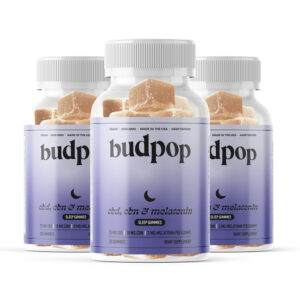
If you want blue lotus combined with CBN, microdose THC, and CBG in a single nano-formulated gummy, Dream Gummies are backed by a 30-day money-back guarantee. Subscribe and save up to 30%.
FDA DISCLOSURE: The statements regarding these products have not been evaluated by the Food and Drug Administration. These products are not intended to diagnose, treat, cure, or prevent any disease. Consult your health physician before use.