Are THC drinks legal in my state? A 2026 map
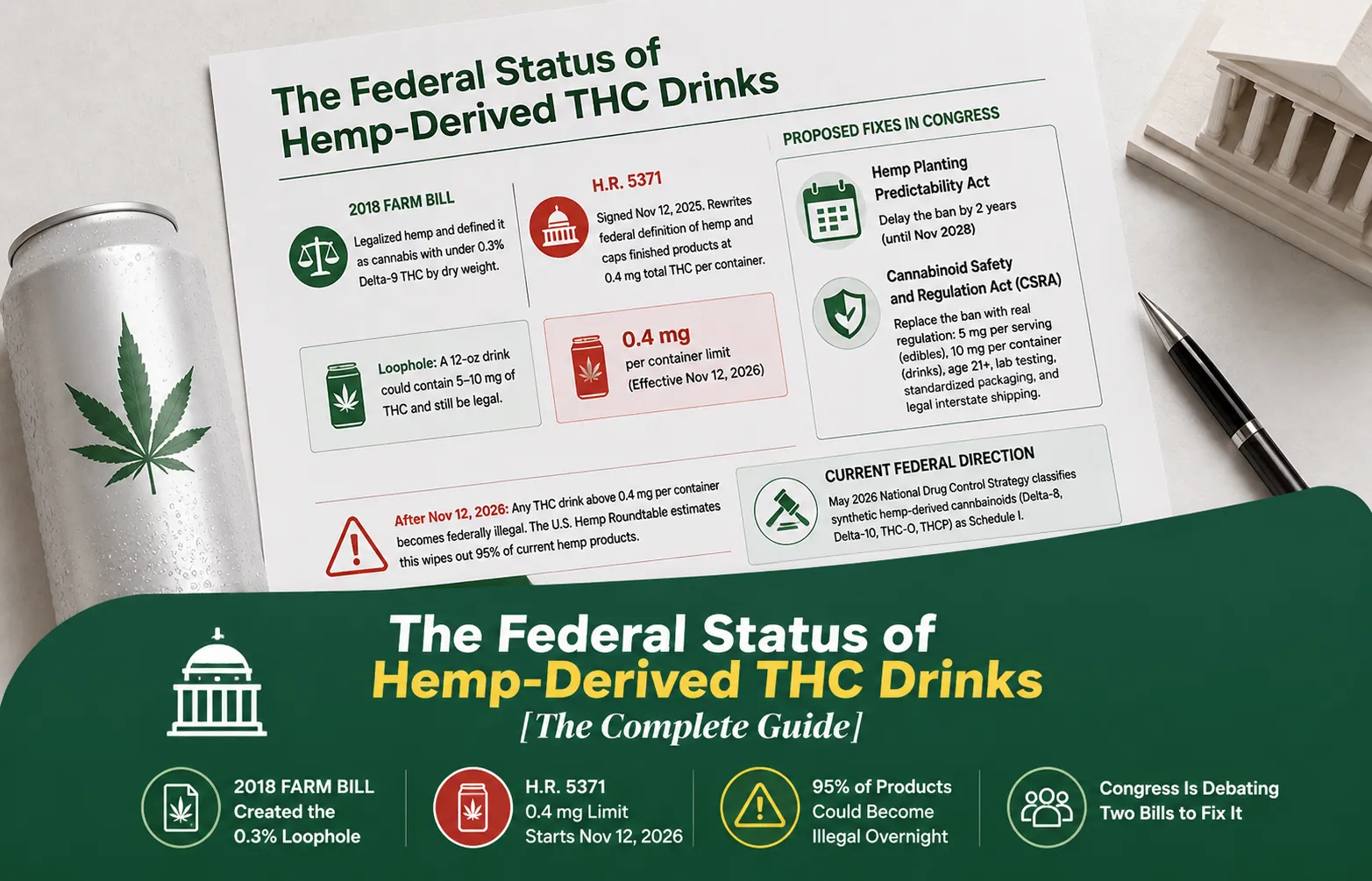
Hemp-derived THC drinks are legal right now in roughly 37 states, restricted through licensed dispensaries in 4 states, and banned in 9 states. But all of that changes on November 12, 2026, when a new federal law (H.R. 5371) caps THC at 0.4 mg per container, which kills every THC seltzer on the market. Congress is debating a carve-out for low-dose drinks. The clock is ticking.
Yes, today. Probably not after November.
Right now, in May 2026, you can legally buy a hemp-derived THC seltzer in roughly 37 states. A handful of states (California, Colorado, Arizona, Alaska) restrict them to the licensed cannabis market. And 9 states (Idaho, Oregon, Washington, Iowa, Mississippi, North Dakota, Rhode Island, Hawaii, Vermont) have banned or effectively prohibited them.
But here’s what most “state-by-state” articles bury or skip entirely: on November 12, 2026, a new federal law makes nearly all of these products illegal nationwide. More on that below.
The federal status of hemp-derived THC drinks
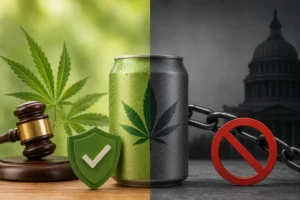
Two laws matter here. The first is the 2018 Farm Bill, which legalized hemp and defined it as cannabis containing under 0.3% Delta-9 THC by dry weight. That dry-weight calculation created a loophole: a heavy product like a 12-oz drink could contain 5 to 10 mg of THC and still fall under the 0.3% threshold.
The second is H.R. 5371, signed by President Trump on November 12, 2025. This law was buried inside a government shutdown funding bill. It rewrites the federal definition of hemp and caps finished products at 0.4 milligrams of total THC per container. A typical THC seltzer has 5 to 10 mg. So 0.4 mg is roughly 1/12th of a standard dose.
The new definition takes effect on November 12, 2026. After that date, any THC drink above 0.4 mg per can becomes federally illegal. The U.S. Hemp Roundtable estimates this wipes out 95% of current hemp products.
Two proposed fixes are floating in Congress right now:
The Hemp Planting Predictability Act would delay the ban by 2 years (until November 2028) to buy time for a real regulatory framework.
The Cannabinoid Safety and Regulation Act (CSRA), introduced by Senators Wyden and Merkley, would replace the ban with actual regulation: 5 mg THC per serving for edibles, 10 mg per container for drinks, age 21 minimum, mandatory lab testing, and standardized packaging. Interstate shipping would be explicitly legal.
Neither has passed yet. And Trump’s May 2026 National Drug Control Strategy classified synthetic hemp-derived cannabinoids (Delta-8, Delta-10, THC-O, THCP) as Schedule I. The White House also called the hemp loophole closure a tool for enforcement. So the political wind is blowing toward restriction.
The 37 states where THC drinks are legal (for now)
In these states, hemp-derived Delta-9 THC drinks under 0.3% THC by dry weight are currently sold at liquor stores, smoke shops, gas stations, online retailers, or some combination. Regulation varies wildly. Minnesota has a full licensing system and sells THC seltzers at Target. Texas allows sales but is actively tightening rules (21+ age gate, no smokable hemp). New York technically allows hemp THC products but caps them at a tiny 1 mg per serving.
Here’s the full list: Alabama, Arkansas, Connecticut, Delaware, Florida, Georgia, Illinois, Indiana, Kansas, Kentucky, Louisiana, Maine, Maryland, Massachusetts, Michigan, Minnesota, Missouri, Montana, Nebraska, Nevada, New Hampshire, New Jersey, New Mexico, New York, North Carolina, Ohio, Oklahoma, Pennsylvania, South Carolina, South Dakota, Tennessee, Texas, Utah, Virginia, West Virginia, Wisconsin, Wyoming.
Some of these are strong markets. Minnesota’s THC drink category is so popular that breweries like Indeed Brewing and Bauhaus Brew Labs get 11 to 26% of their revenue from it. Others, like New York, regulate so tightly that the “legal” label is misleading (1 mg THC per serving is barely perceptible).
The 4 restricted states
California, Colorado, Arizona, and Alaska have all pushed intoxicating hemp products into their existing licensed cannabis systems. You can buy THC drinks in these states, but only through dispensaries or state-regulated retailers.
California’s AB 45 (updated in 2024 under Governor Newsom) explicitly bans the sale of intoxicating hemp products outside the legal cannabis market. Colorado did the same. In both states, you’ll find THC seltzers on dispensary shelves, just not at your local gas station.
The 9 states where they’re banned or restricted
These states have either banned hemp-derived THC products outright or restricted them so heavily that no meaningful market exists.
Idaho: Any amount of THC is illegal. Zero tolerance. Idaho has the strictest hemp law in the country.
Oregon and Washington: Banned intoxicating hemp products outside the regulated cannabis market. Washington did this in 2023; Oregon followed.
Iowa: Banned consumable hemp products containing any detectable THC.
Mississippi: No legal framework for hemp-derived THC products. Effectively prohibited.
North Dakota: Classified Delta-8 and similar cannabinoids as controlled substances.
Rhode Island: Banned intoxicating hemp outside the cannabis program.
Hawaii: Restricted THC hemp products; no legal retail pathway.
Vermont: Banned intoxicating hemp products outside the regulated cannabis market.
If you’re in one of these states, you can’t legally order a THC drink online or buy one in a store. Some brands still ship to these states. That doesn’t make it legal.
State-by-state quick reference
This table reflects the legal status as of May 2026, before the November federal deadline.
| Status | States | Count |
| Legal (varying regulation) | AL, AR, CT, DE, FL, GA, IL, IN, KS, KY, LA, ME, MD, MA, MI, MN, MO, MT, NE, NV, NH, NJ, NM, NY, NC, OH, OK, PA, SC, SD, TN, TX, UT, VA, WV, WI, WY | 37 |
| Restricted (dispensary only) | CA, CO, AZ, AK | 4 |
| Banned / prohibited | ID, OR, WA, IA, MS, ND, RI, HI, VT | 9 |
Important: This snapshot has a 6-month shelf life at best. The federal ban hits November 12. Check your state’s current regulations before ordering.
The November 12, 2026 deadline: what changes
On that date, the amended definition of hemp takes full effect under H.R. 5371. Here’s what it means in plain terms:
Any finished hemp product with more than 0.4 mg of total THC per container becomes federally illegal. Total THC now includes Delta-9, Delta-8, Delta-10, THCA, and every other THC variant. A standard 5 mg THC seltzer exceeds this limit by more than 12x.
Synthetic and lab-converted cannabinoids (Delta-8 from CBD conversion, THC-O, HHC, THCP) are explicitly excluded from the definition of hemp. They become Schedule I controlled substances.
The $28.4 billion hemp industry calls this an extinction-level event. Senator Rand Paul said the provision “makes the hemp industry kaput.” The U.S. Hemp Roundtable says it eliminates 95% of hemp products, including most non-intoxicating CBD products (which typically contain trace THC above 0.4 mg).
The CSRA carve-out (5 mg edibles, 10 mg drinks) is the industry’s best hope. But as of May 2026, it hasn’t passed. The Hemp Planting Predictability Act (2-year delay) has 15 House co-sponsors and bipartisan Senate support, which is probably the more realistic short-term outcome.
If you’re reading this and it’s still before November: the products are legal today. Buy from compliant brands. But don’t stock up assuming the rules stay the same.
How to verify before you order
Check three things before buying a THC drink online or in a store.
- Your state. If you’re in one of the 9 banned states, stop. No compliant brand should be shipping to you. If they are, that’s a red flag about their compliance practices overall.
- The brand’s COA (certificate of analysis). Any reputable brand publishes third-party lab results for every batch. The COA should confirm the product is under 0.3% Delta-9 THC by dry weight and list the exact milligram dosage. If a brand doesn’t have accessible COAs, skip them.
- Age verification. Legitimate retailers require you to be 21+. If a site lets you buy without age verification, they’re probably cutting other compliance corners too.
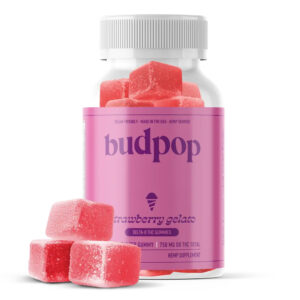
BudPop publishes batch-specific COAs via QR codes on every package, uses ISO-certified third-party labs, and ships only to states where their products are legal. That’s the standard to look for.
FAQ Related to “Are THC drinks legal in my state? “
Can I buy THC drinks on Amazon?
No. Amazon prohibits the sale of THC products. You’ll find CBD products there, but anything with intoxicating THC is restricted to brand websites and licensed retailers.
Will THC drinks show up on a drug test?
Yes. Standard drug tests can’t tell the difference between hemp-derived THC and marijuana-derived THC. If you’re subject to drug screening, THC drinks will likely cause a positive result.
Are THC drinks legal to fly with?
Technically, TSA follows federal law, and hemp-derived THC products under 0.3% are federally legal (until November 2026). In practice, TSA says they don’t actively search for cannabis products, but if they find something suspicious, they refer it to local law enforcement. Your destination state’s laws apply when you land.
What happens to THC drinks after the November ban?
If Congress doesn’t pass a carve-out or delay, every THC drink above 0.4 mg per container becomes federally illegal. Brands will need to either reformulate to near-zero THC, pivot to non-intoxicating cannabinoids (CBD, CBN, CBG), or exit the market. The CSRA proposes allowing drinks up to 10 mg per container under federal regulation.
Is there a difference between hemp THC and marijuana THC?
Chemically, no. Delta-9 THC is Delta-9 THC. The difference is legal: hemp-derived THC comes from cannabis plants with under 0.3% THC, making it federally legal under the 2018 Farm Bill (for now). Marijuana-derived THC comes from higher-THC plants and is a Schedule I substance federally.
Where can I buy BudPop products?
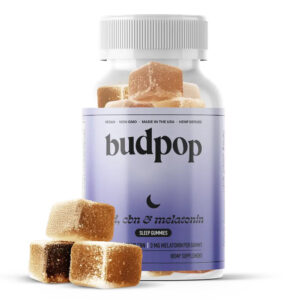
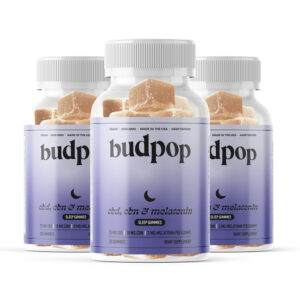
At budpop.com. BudPop ships to all states where their hemp-derived products are legal, with batch-specific lab results on every product. Their lineup includes Delta-8, Delta-9, CBD, HHC, and THCp gummies, all made from American-grown hemp in cGMP-certified facilities.