Blue lotus (Nymphaea caerulea) has been used for over 3,000 years, dating back to ancient Egyptian ceremonial use. The flower contains two primary active compounds: apomorphine (a dopamine agonist) and nuciferine (an antipsychotic-adjacent compound with calming, sedative properties). Together, they produce a distinctive combination of mild euphoria, body relaxation, and dream enhancement that doesn’t fit neatly into any other category.
The dosing depends entirely on what you’re trying to achieve. Below is the three-tier system that aligns with how most blue lotus gummy manufacturers formulate their products and how experienced users describe the dose-response curve.
Three blue lotus gummies dosage tiers
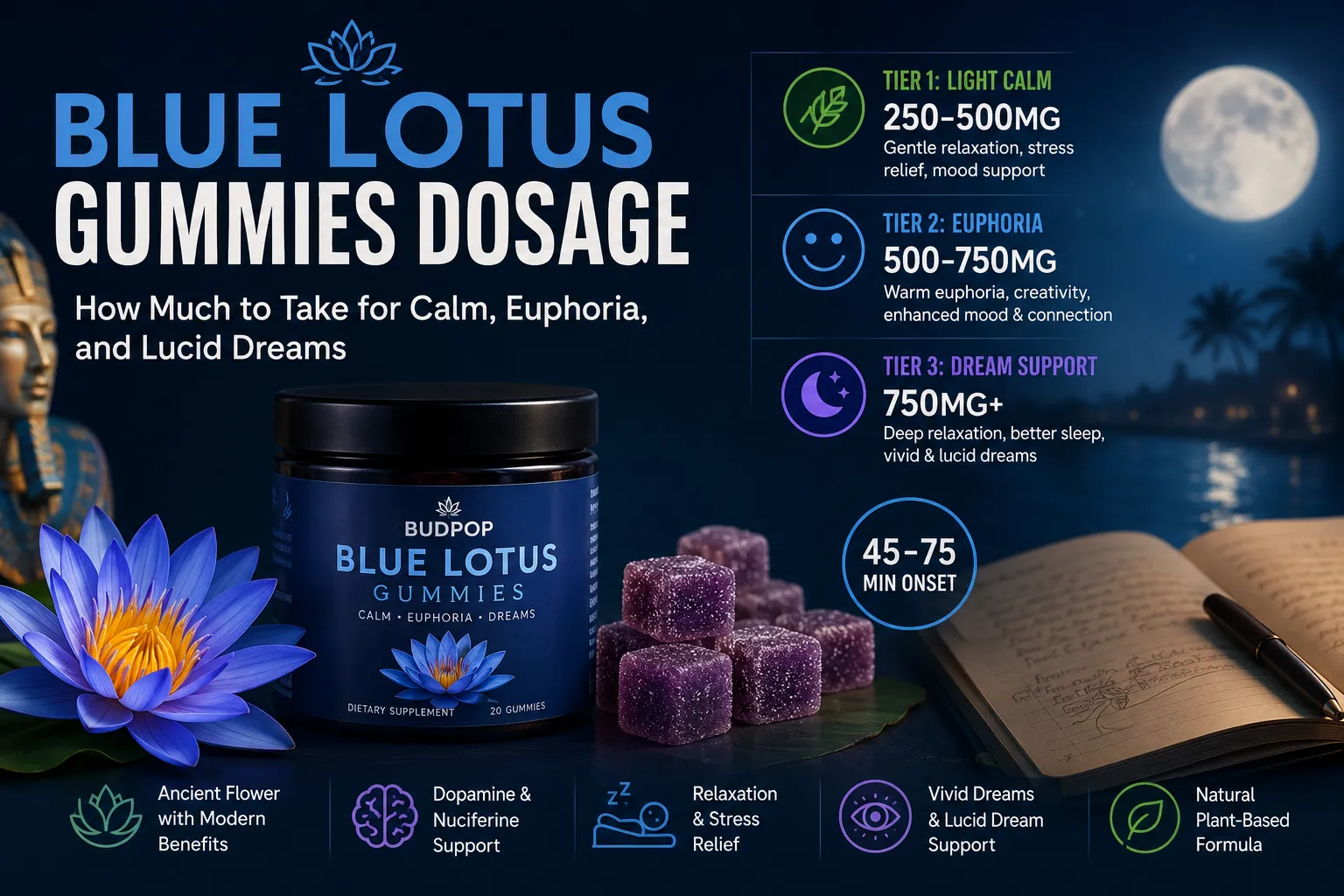
Tier 1: Light calm (250 to 500mg blue lotus extract)
At this range, most people notice: slight mood lift, gentle muscle relaxation, reduced mental chatter. The effect is subtle enough that you might question whether it’s working. It is. The dopaminergic activity from apomorphine creates a mild warmth and contentment that doesn’t impair cognition or coordination.
Best for: Daytime stress management, pre-meeting calm, gentle unwinding after work without drowsiness. Pair with tea or a warm drink for a meditative ritual.
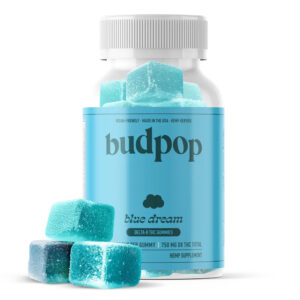
BudPop’s position: Their Blue Lotus Gummies contain blue lotus extract as part of a broader calming blend. Start with one gummy and assess at 60 minutes.
Tier 2: Noticeable euphoria (500 to 750mg blue lotus extract)
At this range, the dopamine activity becomes unmistakable. Users report: warm euphoria in the chest and face, increased appreciation for music and visuals, sociable and talkative mood, gentle body high, enhanced sensory perception. The experience is often compared to a very light MDMA-adjacent warmth without the stimulant edge.
Best for: Evening relaxation, social gatherings, creative sessions, romantic evenings. The euphoria is pleasant and manageable, not overwhelming. You remain functional and present.
Timing: Take 60 to 75 minutes before you want to feel the effects. Blue lotus gummies follow standard edible pharmacokinetics (stomach, intestine, liver processing).
Tier 3: Deep relaxation and lucid dream support (750mg+ blue lotus extract)
At higher doses, nuciferine’s sedative properties become the dominant effect. Body relaxation deepens. Drowsiness increases. The mind becomes dreamy and unfocused. Many users at this tier specifically take blue lotus before sleep for its reported lucid dream enhancement.
The lucid dream connection is blue lotus’s most distinctive property. Ancient Egyptian artwork frequently depicts blue lotus in contexts of dreaming and spiritual journeys. Modern users report more vivid, colorful, and controllable dreams when taking blue lotus 30 to 60 minutes before sleep at higher doses. The mechanism isn’t fully understood but likely involves nuciferine’s interaction with dopamine D2 receptors during REM sleep.
Best for: Pre-sleep relaxation, lucid dream exploration, deep wind-down after a stressful day. Not for daytime use at this dose (too sedating for most people).
Timing: Take 45 to 60 minutes before bed. Get into bed before the drowsiness peaks. Don’t fight it.
Blue lotus + cannabinoid combinations
Blue lotus and cannabinoids affect different receptor systems (dopamine/nuciferine vs endocannabinoid), which means they can complement each other without directly competing for the same receptors.
Blue lotus + CBD
The calmest possible combination. CBD’s serotonergic activity plus blue lotus’s dopaminergic warmth creates a deeply relaxed, contented state without any psychoactive intensity. Good for anxiety management, evening wind-down, or meditation.
BudPop’s CBD + Ashwagandha Gummies (25mg CBD + 150mg ashwagandha) paired with a blue lotus gummy at Tier 1 dosage creates a triple-pathway calming stack: serotonin (CBD), cortisol reduction (ashwagandha), and dopamine (blue lotus).
Blue lotus + THC
Blue lotus adds euphoric warmth and dream enhancement to the THC experience. The combination is popular among users who find THC alone too “heady” or anxiety-prone. Blue lotus’s calming baseline can smooth the edges of THC’s psychoactive effects.
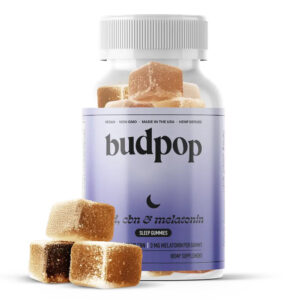
BudPop’s Dream Gummies already combine Delta-9 THC with CBG, CBN, and Blue Lotus extract in a single product designed for deep sleep and vivid dreams. This is the pre-built version of the blue-lotus-plus-THC stack.
Dose caution: When combining blue lotus with THC, reduce both doses by 30 to 50% from what you’d normally take individually. The combination produces synergistic effects stronger than either compound alone. Start with half a blue lotus gummy plus half a THC gummy and assess.
Blue lotus + Amanita muscaria
Both are sedating. The combination doubles the sedation pathway (GABA from Amanita + dopamine/nuciferine from blue lotus) and can produce excessive drowsiness and disorientation. Not recommended for beginners. Experienced users who combine them typically use quarter-doses of each. Evening use only. Have nowhere to be for 8+ hours.
Onset, peak, and duration
| Metric | Blue Lotus Gummies |
|---|---|
| Onset | 45 to 75 minutes |
| Peak | 90 to 120 minutes |
| Duration | 3 to 5 hours (mood effects), 6 to 8 hours (dream effects if taken before sleep) |
| Food interaction | Light meal with fat improves absorption. Heavy meal delays onset. |
| Next morning | Generally clean. No hangover. Some users report a pleasant afterglow. |
Blue lotus is not a heavy compound. The most common user complaint isn’t “it was too strong” but “I didn’t feel much.” If you’re in that camp, you’re probably at Tier 1 and need to increase to Tier 2 range. Give any dose at least 75 minutes before judging effectiveness.
Side effects and safety
Blue lotus gummies at standard doses have a mild side effect profile:
Common: Slight dry mouth, mild drowsiness at higher doses, occasionally vivid or unusual dreams (this is a feature for most users, not a bug).
Uncommon: Mild nausea at very high doses (rare with properly extracted gummies). Lightheadedness if taken on a completely empty stomach.
Important interactions: Blue lotus contains apomorphine, a dopamine agonist. Do not combine with MAOIs (monoamine oxidase inhibitors), Parkinson’s disease medications (which also affect dopamine), or antipsychotics. If you take any psychiatric medication, consult your physician before using blue lotus.
Pregnancy and breastfeeding: No safety data exists. Avoid.
Driving: At Tier 1 (250 to 500mg), most users report no impairment. At Tier 2 and above, drowsiness and altered perception make driving inadvisable. Use the same judgment you’d apply to any sedating compound.
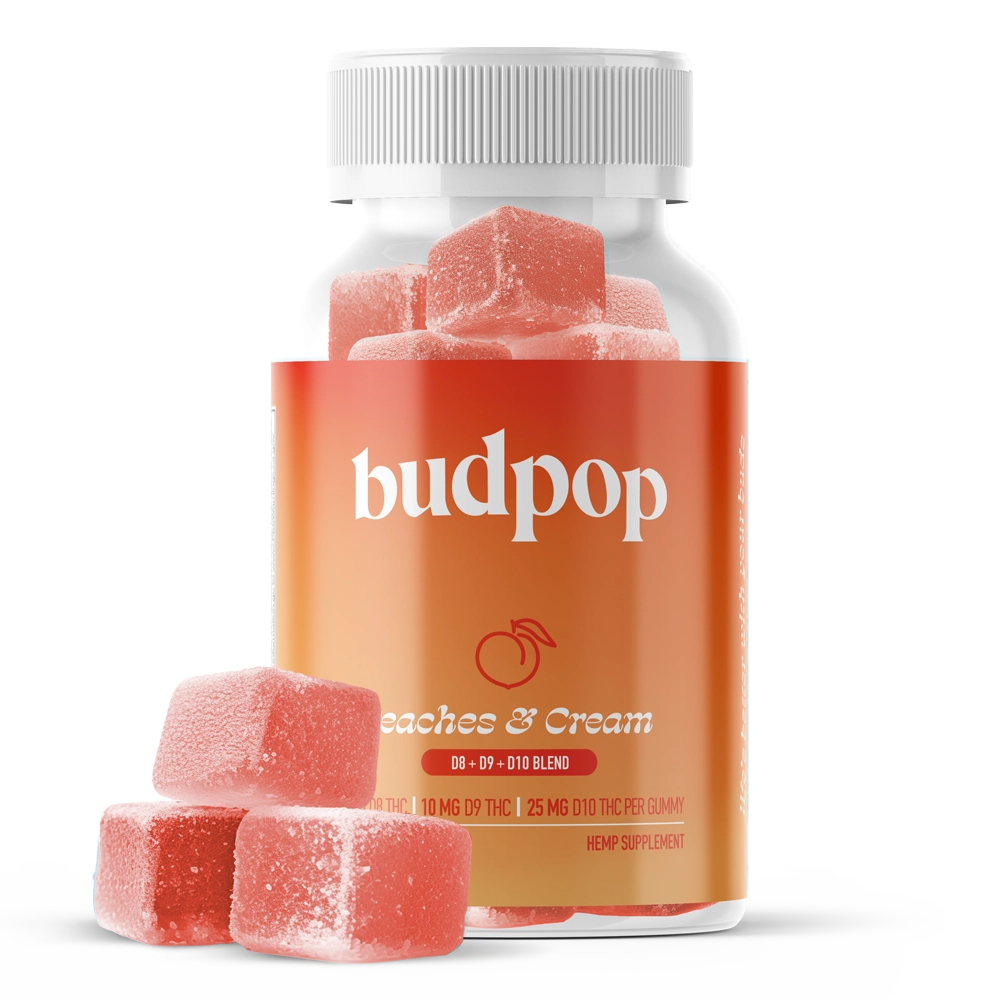
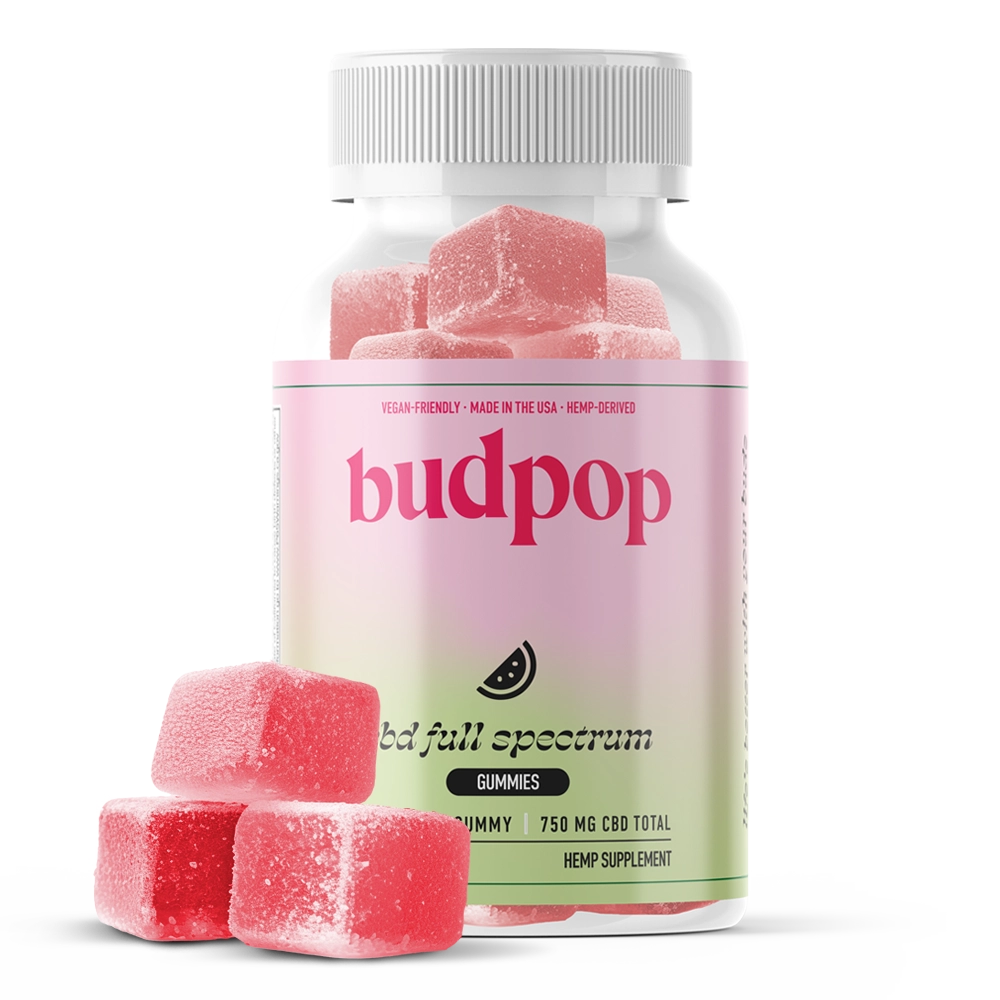
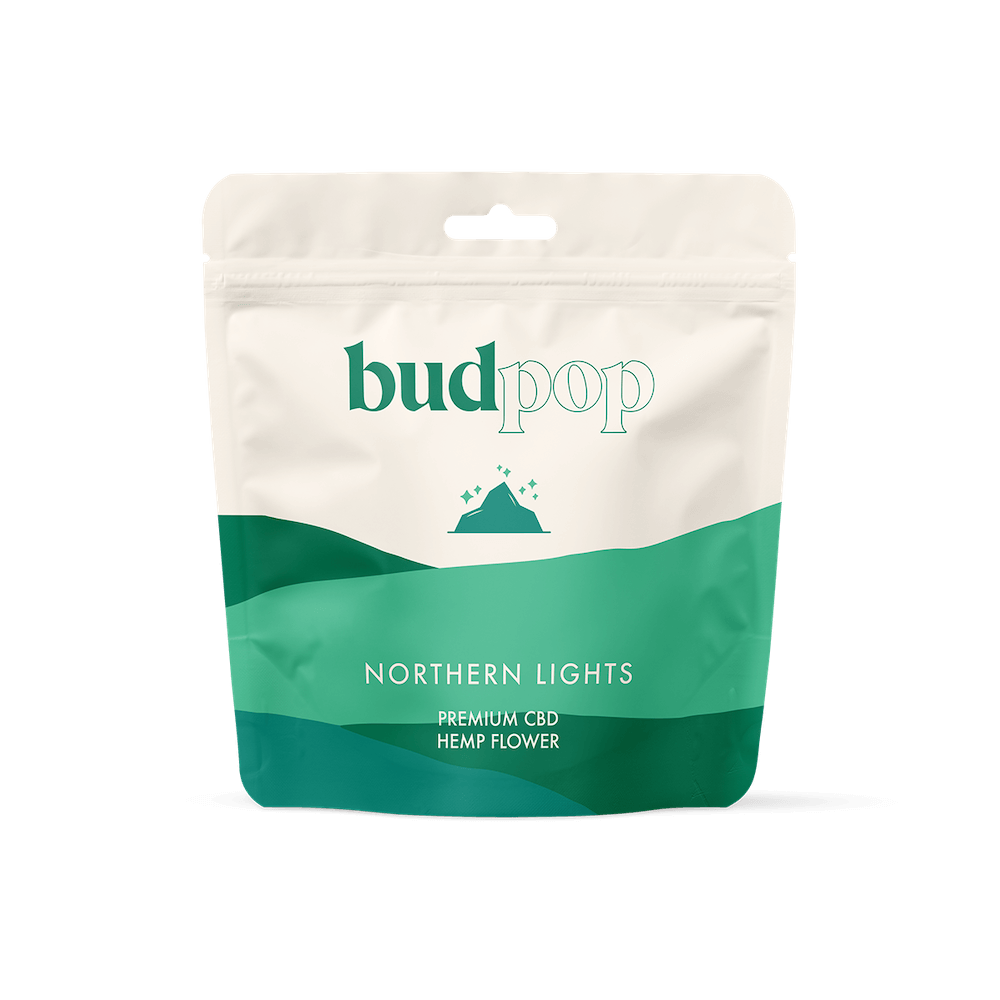
THC RECOVERY PICKS
Feeling Too High From Edibles?
These hemp-derived products are popular for promoting calmer,
smoother, and more manageable THC effects.
Frequently asked questions
How many blue lotus gummies should I take?
Start with one gummy. Most commercial blue lotus gummies contain 250 to 500mg of extract per piece, which lands in the Tier 1 (calm) to low Tier 2 (mild euphoria) range. Wait 75 minutes. If effects are too subtle, take a second gummy next session rather than stacking the same evening.
Does blue lotus show up on a drug test?
Standard drug panels do not test for apomorphine or nuciferine. Blue lotus alone should not trigger a positive result. If your blue lotus gummy also contains THC (like BudPop’s Dream Gummies), the THC component will show on standard tests.
Is blue lotus legal?
Blue lotus (Nymphaea caerulea) is not a controlled substance in the United States and is legal to buy, sell, and possess in all 50 states. It is not approved by the FDA as a dietary supplement, food additive, or drug, which means it exists in a regulatory gray zone but is not prohibited.
Can blue lotus help with insomnia?
At Tier 3 dosage (750mg+), blue lotus’s sedative properties from nuciferine can support sleep onset. It’s not as powerful as dedicated sleep compounds (melatonin, CBN) but adds a unique dream-enhancement quality that sleep-specific products don’t provide. BudPop’s Dream Gummies combine blue lotus with D9, CBG, and CBN for a more complete sleep formula.
How does blue lotus compare to THC for relaxation?
Different mechanisms, different character. THC activates CB1 receptors (endocannabinoid system) and produces a recognizable “high.” Blue lotus activates dopamine and nuciferine pathways, producing warm euphoria without the cognitive impairment or psychoactive intensity of THC. Blue lotus is lighter and more subtle. THC is stronger and more defined. Many users prefer combining low doses of both.
Disclaimer: This article is for informational purposes only. Blue lotus is not FDA-approved for any medical condition. Do not combine with MAOIs, antipsychotics, or dopaminergic medications. Consult a healthcare professional if you take prescription medications. You must be 21 or older to purchase products containing blue lotus from most retailers.