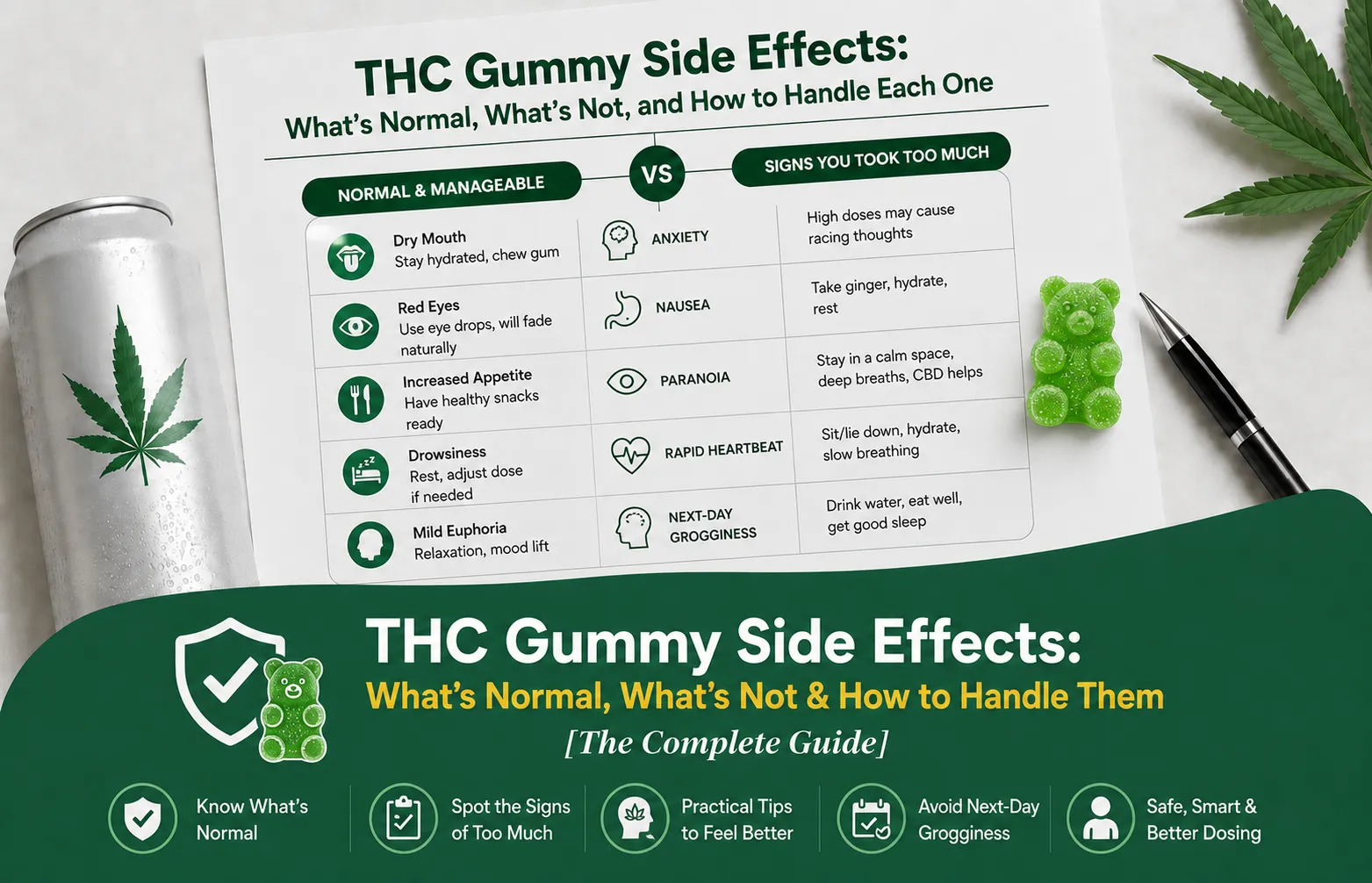
THC gummy side effects: what’s normal, what’s not, and how to handle each one
Every THC gummy produces side effects. Some are mild and expected (dry mouth, red eyes). Some appear only at higher doses (anxiety, rapid heartbeat). Some are signs you took too much (nausea, paranoia, “greening out”). And a few are rare but worth knowing about (cannabinoid hyperemesis, next-day cognitive fog).
This guide ranks every documented side effect by severity, explains the mechanism behind each one, and tells you what to do about it. No vague “consult your doctor” at every line. Specific, practical responses.
Tier 1: Expected at any dose (normal, manageable)
Dry mouth (cottonmouth)
What it is: THC binds to CB1 and CB2 receptors in your submandibular salivary glands, reducing saliva production by up to 50% at standard doses. Almost everyone gets it.
How to handle it: Water. Lots of water. Start hydrating before you take the gummy. Keep a bottle within reach. Sugar-free hard candy or gum stimulates saliva production. Avoid alcohol (dehydrates further) and salty snacks (intensifies the dryness).
Red eyes
What it is: THC is a vasodilator. It relaxes blood vessel walls, including the tiny capillaries in your eyes. More blood flow through those capillaries = visible redness. This happens regardless of how you consume THC.
How to handle it: Eye drops (artificial tears or redness-reducing drops like Visine). The redness is cosmetic, not harmful. It resolves on its own as the THC wears off. Some people don’t get red eyes at all, possibly due to individual differences in ocular blood vessel sensitivity.
Increased appetite (the munchies)
What it is: THC activates CB1 receptors in the hypothalamus, which regulates hunger. It also increases the release of ghrelin (the “hunger hormone”) and enhances the smell and taste of food by activating olfactory and gustatory processing.
How to handle it: Have healthy snacks pre-prepared. The munchies hit hardest during the descent phase (2 to 4 hours after peak). If you’re managing calories, eat before taking the gummy so you’re not ravenously hungry when the munchies arrive.
Drowsiness
What it is: THC promotes sleep by activating CB1 receptors in the basal forebrain and increasing adenosine levels. Higher doses (10mg+) and indica-terpene-dominant products amplify drowsiness. Products with CBN add additional sedation.
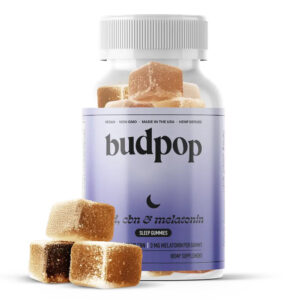
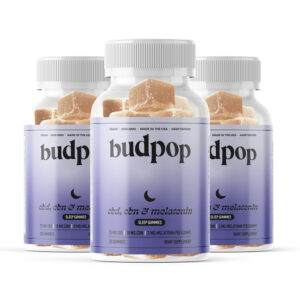
How to handle it: If drowsiness is unwanted, lower your dose or switch to a sativa-terpene-dominant product. If drowsiness is welcome (you’re taking it for sleep), lean into it. BudPop’s Lights Out Sleep Gummies are designed to produce this effect intentionally.
Tier 2: Dose-dependent (appears at higher doses or in sensitive individuals)
Anxiety and racing thoughts
What it is: THC’s relationship with anxiety is biphasic. Low doses (2.5 to 5mg) reduce anxiety via CB1 activation in the amygdala. High doses (15mg+ in sensitive individuals) overstimulate the amygdala and produce the opposite: heightened fear response, racing thoughts, hypervigilance.
How to handle it: First, know that it’s temporary and not dangerous. Breathe slowly. Move to a quiet, comfortable space. Chew 2 to 3 whole black peppercorns (beta-caryophyllene, a CB2-binding terpene that counteracts THC anxiety). Take 25 to 50mg CBD if available. The anxiety will subside as your body metabolizes the THC, typically within 1 to 2 hours of peak.
Prevention: Keep your dose below your anxiety threshold. If 10mg causes anxiety, your sweet spot is probably 5 to 7.5mg. Adding CBD to your THC dose provides a buffer that prevents the amygdala from overshooting.
Rapid heartbeat (tachycardia)
What it is: THC increases heart rate by 20 to 50% within 30 to 60 minutes of onset. This is a direct cardiovascular effect of CB1 activation. Heart rate stays higher for 1 to 3 hours, then normalizes. At standard doses, this is well within safe parameters for healthy adults.
How to handle it: Stay seated or lying down. Drink cold water. Practice slow breathing (4 seconds in, 6 seconds out). The faster heart rate is not a medical emergency in healthy individuals. If you have a pre-existing heart condition (arrhythmia, heart failure, recent cardiac event), consult your cardiologist before using THC.
When to worry: If heart rate exceeds 150 bpm, you feel chest pain (not just awareness of your heartbeat, but actual pain), or you have shortness of breath that isn’t explained by anxiety. These warrant medical evaluation. They’re extremely rare at standard edible doses but possible at very high doses in individuals with cardiac risk factors.
Impaired coordination and reaction time
What it is: THC affects the cerebellum (motor coordination) and basal ganglia (movement initiation). At 10mg+, most users have measurably slower reaction times and reduced fine motor control.
How to handle it: Don’t drive. Don’t operate machinery. Don’t cook with sharp knives. This is the practical side effect that most people underestimate. Plan your activity level before taking the gummy. Movies, music, and conversation are fine. Cooking a complex meal or assembling furniture are surprisingly risky when your spatial awareness is THC-altered.
Tier 3: Signs you took too much (reduce dose next time)
Nausea and vomiting
What it is: Paradoxical. THC is antiemetic at low doses (FDA-approved for chemo nausea) but can trigger nausea at very high doses. The mechanism: at extreme doses, THC activates prokinetic gut receptors that compete with the antiemetic brain receptors. The gut wins.
How to handle it: Lie on your side (recovery position). Sip ginger tea or ginger ale. Cool cloth on your forehead. Deep, slow breathing. The nausea passes as your body processes the THC. If you vomit, you’ll feel better afterward because the nausea trigger was central (brain), not gastric (stomach), so vomiting resolves the acute symptom.
“Greening out” (pale, sweaty, faint)
What it is: A vasovagal response triggered by the combination of THC-induced blood pressure drop and anxiety. Blood pressure falls, blood pools in your legs, your brain gets momentarily less blood flow, and you feel lightheaded, pale, and sweaty. It looks scary but resolves quickly.
How to handle it: Lie down immediately with your feet raised above your heart. This redirects blood flow to your brain. Drink cold water. Eat something salty (salt increases blood volume). Stay lying down for 15 to 20 minutes. The episode passes.
Paranoia
What it is: Extreme anxiety with the added component of threat perception. You become convinced that something is wrong, someone is watching you, or danger is present. It’s the most psychologically unpleasant THC side effect and is almost exclusively a high-dose phenomenon in anxiety-prone individuals.
How to handle it: Change your environment. Move to a different room. Turn on familiar, comforting music or TV. Remind yourself (or have someone remind you) that you took a THC gummy, it’s temporary, and you’re safe. The paranoia is a pharmacological effect, not a reflection of reality. It resolves as the THC metabolizes. CBD can help reduce it.
Tier 4: Uncommon but important
Next-day grogginess (“edible hangover”)
What it is: 11-hydroxy-THC has a long half-life. At higher doses (15mg+), residual metabolites can still be present the next morning. Some users describe feeling foggy, slightly off-balance, or mentally slow the next day.
How to handle it: Hydrate heavily before bed and in the morning. Coffee helps. Light exercise clears the fog within 30 to 60 minutes for most people. Taking your gummy earlier in the evening (8 PM rather than midnight) gives your body more processing time before morning.
Prevention: Lower your dose. Most next-day grogginess comes from exceeding your effective dose the night before. If 15mg gives you a hangover, 10mg probably won’t.
Cannabinoid hyperemesis syndrome (CHS)
What it is: A condition that develops in some heavy daily cannabis users (typically months to years of daily use). Symptoms: cyclic severe nausea and vomiting, abdominal cramping, compulsive hot showering (the only thing that provides temporary relief). CHS is paradoxical because cannabis normally reduces nausea, but chronic heavy use can reverse this in susceptible individuals.
How to handle it: Stop all cannabis use immediately. CHS resolves completely with cessation, usually within days to weeks. Hot showers provide temporary relief through capsaicin-TRPV1 receptor activation. If vomiting is severe, seek medical attention for dehydration management.
CHS is uncommon. It’s worth mentioning because users who take gummies daily at high doses for months should be aware that worsening nausea might be CHS rather than a bad batch.
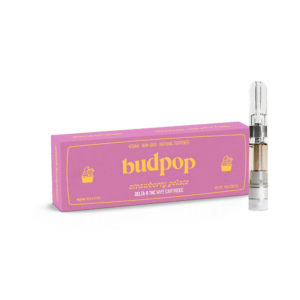
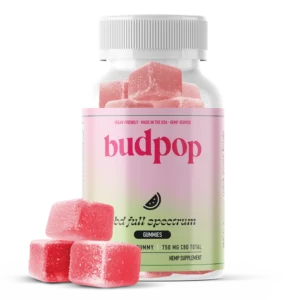
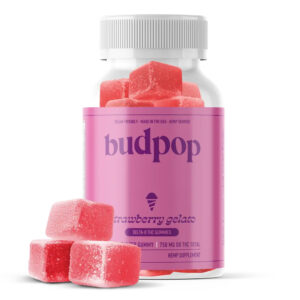
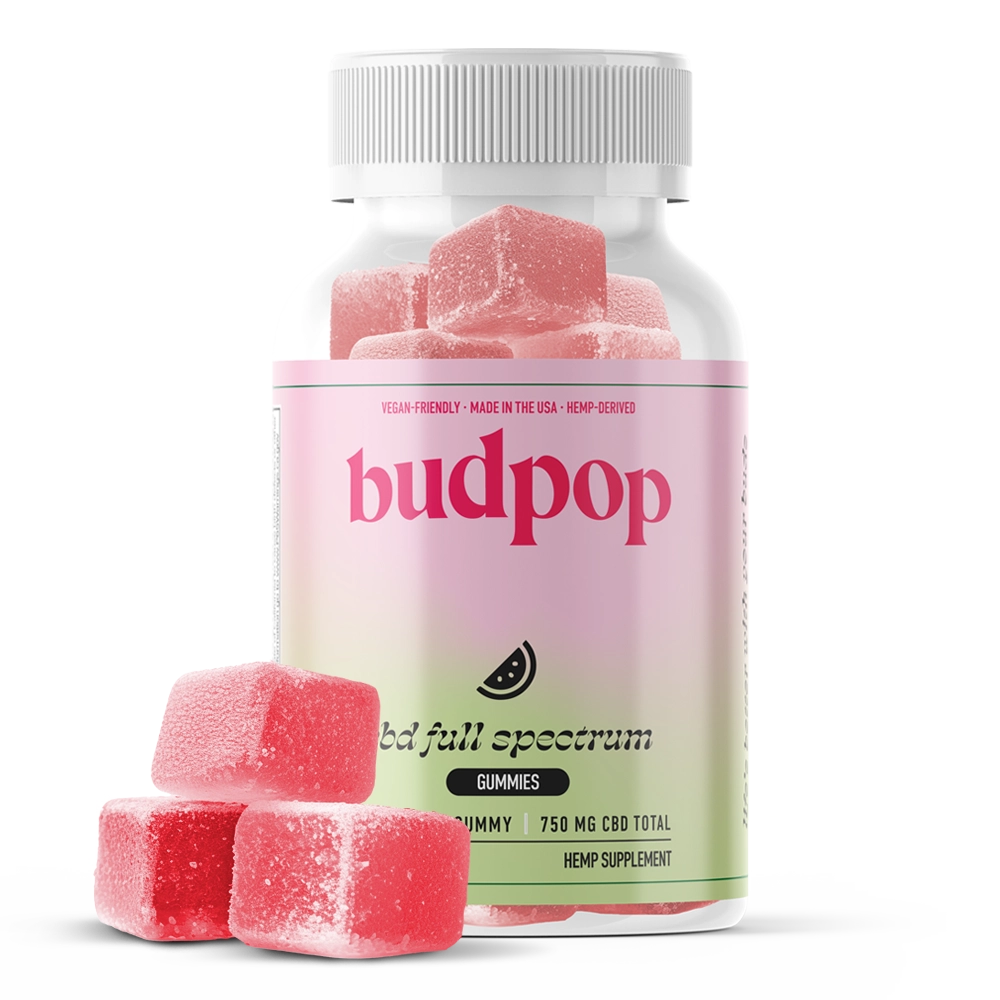
THC RECOVERY PICKS
Feeling Too High From Edibles?
These hemp-derived products are popular for promoting calmer,
smoother, and more manageable THC effects.
Frequently asked questions
What are the most common THC gummy side effects?
Dry mouth, red eyes, increased appetite, and drowsiness. These occur at virtually any dose and are expected, manageable, and temporary. They’re not signs of a problem; they’re signs the gummy is working.
Can THC gummies give you a headache the next day?
Yes, usually from dehydration. THC increases urination and reduces saliva production, both of which deplete hydration. Drinking water before bed and in the morning prevents most THC-related headaches. If headaches persist at low doses, the gummy’s other ingredients (sugar alcohols, artificial sweeteners) might be the culprit rather than the THC itself.
Are THC gummy side effects dangerous?
At standard doses (2.5 to 25mg) in healthy adults, no. Side effects are uncomfortable at worst. At very high doses or in people with cardiovascular conditions, tachycardia deserves monitoring. THC has no known lethal dose in humans. The most common “emergency” from edibles is anxiety, which resolves on its own.
How do I reduce side effects from THC gummies?
Lower your dose. Add CBD as a buffer. Stay hydrated. Eat before dosing. Avoid alcohol. Choose a familiar, comfortable setting. The majority of unpleasant side effects scale directly with dose: lower dose = fewer side effects at a linear rate.
Disclaimer: This article is for informational purposes only. If you experience chest pain, severe allergic reaction, or symptoms of cannabinoid hyperemesis syndrome, seek medical attention. THC can interact with medications including blood thinners, SSRIs, and cardiac drugs. Consult your healthcare provider before using THC if you have pre-existing conditions. You must be 21 or older to purchase.