How much do THC gummies cost in 2026? A real buyer price guide
In 2026, hemp-derived THC gummies cost about $0.50 to $1.20 per milligram of THC. A 30-count bottle of 10 mg gummies typically runs $30 to $60. High-potency 100 mg gummies cost $8 to $15 per piece. Lab-tested brands cost more than uncertified gas-station brands and are worth it.
Cost per milligram: the only number that matters
Most people compare THC gummies by price per bottle or price per piece. That’s the wrong comparison.
A $40 bottle of 10 mg gummies and a $40 bottle of 25 mg gummies are not the same value. You’re getting 2.5 times more THC per dollar in the second bottle.
Cost per mg is the right metric. Divide the total price by the total milligrams of THC in the package. That number is what you’re actually paying for.
Here’s the math on a $45 bottle of 30 gummies at 10 mg each: 30 times 10 equals 300 mg total. $45 divided by 300 mg equals $0.15 per mg. That’s a fair price for a lab-tested hemp brand.
A gas-station gummy that’s $1.50 for a 5 mg piece works out to $0.30 per mg. Twice the cost, with almost certainly worse quality control. The per-mg lens makes that obvious immediately.
Across reputable brands in 2026, a fair cost per mg falls somewhere between $0.10 and $0.25. Under $0.10 is suspiciously cheap. Over $0.40 per mg is either a premium brand charging for branding, or a low-potency product with bad unit economics.
Typical prices for 5 mg, 10 mg, 25 mg, 50 mg, and 100 mg gummies
| Dose | Price per piece | Cost per mg | Notes |
| 5 mg | $3 to $6 per piece | $0.60 to $1.20 per mg | Entry-level dose. Common in starter packs and sample bundles. |
| 10 mg | $1.50 to $4 per piece | $0.15 to $0.40 per mg | Standard dispensary dose. Most widely available size. |
| 25 mg | $4 to $10 per piece | $0.16 to $0.40 per mg | Mid-potency. Better cost per mg than lower doses. |
| 50 mg | $6 to $12 per piece | $0.12 to $0.24 per mg | High-potency. Usually reserved for experienced users. |
| 100 mg | $8 to $15 per piece | $0.08 to $0.15 per mg | High value per mg. Best unit economics, higher risk for new users. |
A few things to pull from this table. First, the cost per mg drops substantially as dose per piece goes up. A 100 mg gummy at $0.10 per mg is 6 to 12 times better value per milligram than a 5 mg gummy at $0.60 to $1.20 per mg.
Second, the 10 mg to 25 mg range has the most options and the most pricing competition. That’s where brands fight hardest for your business, and where you’ll find the best deals from legitimate companies.
Why some THC gummies cost twice as much as others
Lab testing
A Certificate of Analysis (COA) from an accredited third-party lab costs the brand real money per batch. Brands that test every batch, post the results publicly, and test for both potency and contaminants (heavy metals, pesticides, residual solvents) pass those costs to you.
That premium is legitimate. An untested gummy has no independent verification of how much THC it actually contains or what else is in it. Some cheap products are underdosed by 30 to 50 percent. Some contain contaminants.
Always look for a COA before buying. The best brands link to batch-specific lab reports on every product page. If you can’t find one, that’s your answer.
Hemp source: US grown vs imported
Hemp grown in the US falls under USDA oversight, with soil and pesticide standards that imported hemp doesn’t face. US-grown hemp costs more to produce, and that shows up in the retail price by roughly 10 to 20 percent.
Imported hemp from China or Eastern Europe is legal and sometimes fine, but the regulatory gap is real. For a product you’re putting in your body, US-grown is the cleaner choice.
Naturally derived vs synthesized
Some brands extract Delta-9 THC directly from hemp plant material. Others synthesize cannabinoids chemically. Naturally derived costs more but tends to produce a cleaner product with fewer processing byproducts.
Synthesized isn’t automatically unsafe, but the QA burden falls more heavily on the brand’s testing. Without a COA specifically checking for synthesis byproducts, you’re trusting the process blindly.
Added cannabinoids (CBN, CBG, CBC)
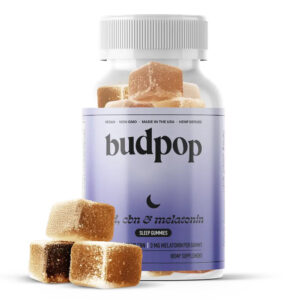
Gummies with added minor cannabinoids like CBN (for sleep) or CBG (for focus) cost 20 to 40 percent more than plain Delta-9 gummies at the same THC dose. The premium reflects both the cost of the additional cannabinoids and the R&D behind the formulation.
Whether the added cannabinoids are worth paying for depends on your use case. CBN has decent evidence behind it for sleep. CBG has some early research. CBC is less established. If you’re buying a sleep gummy for $0.30 per mg when a plain Delta-9 option costs $0.15 per mg, know what you’re paying for.
Where to buy cheap THC gummies, and what you give up
The cheapest THC gummies in 2026 come from gas stations, convenience stores, and unverified third-party sellers on discount marketplaces. You can find 5-count packages for $8 to $12.
Here’s what you typically give up at that price: no published COA, no information on hemp source, inconsistent potency between batches, and possible contamination. Some of these products genuinely deliver. A lot don’t.
The legal hemp market has a quality spectrum. At the bottom end, the main selling point is the price tag. Nothing else is guaranteed.
If budget is the real constraint, a better move than buying the cheapest product is buying a smaller quantity from a trustworthy brand. A 5-count sampler from BudPop or Koi at $18 to $25 gets you 5 reliable gummies, which is more useful than 20 questionable ones.
Where to find real value: the BudPop guarantee model
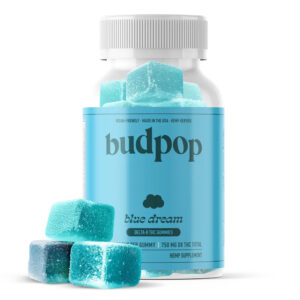
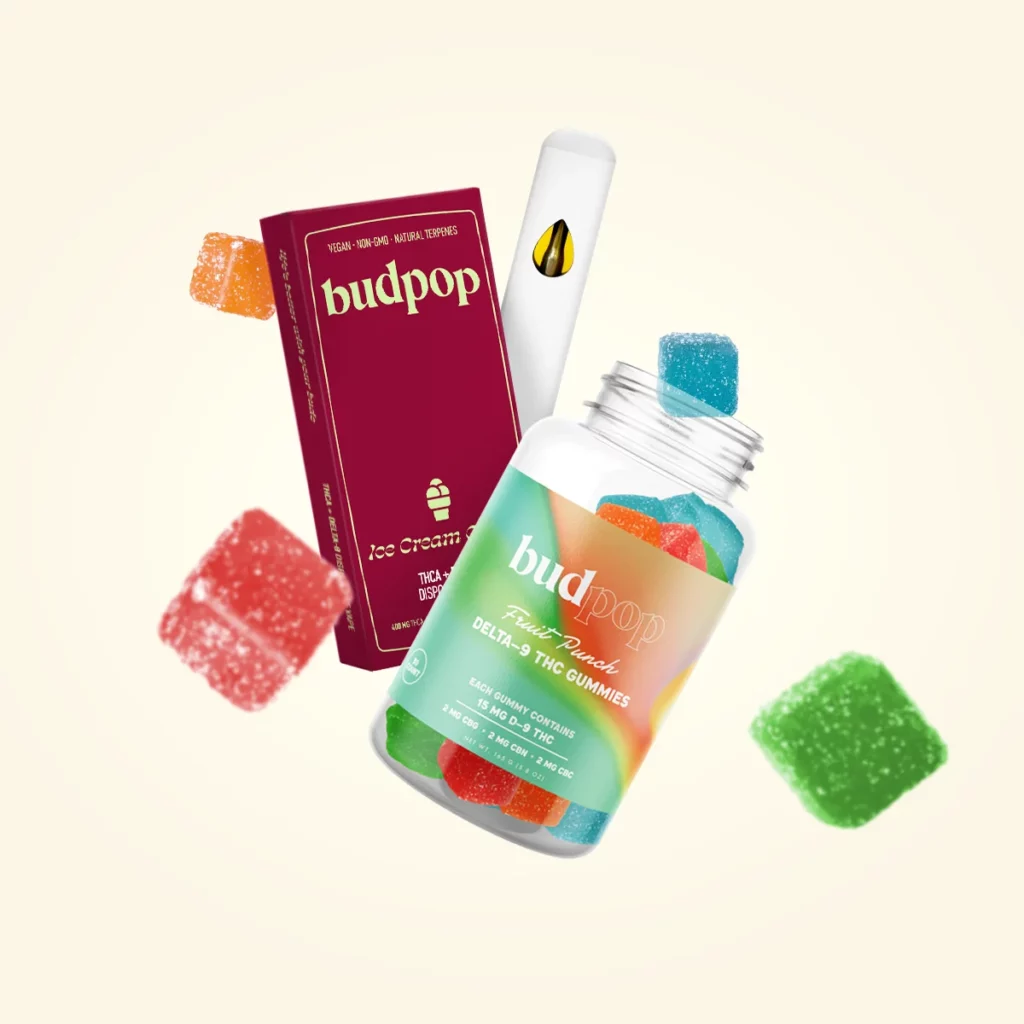
A handful of hemp brands have built their reputations specifically around the value-per-mg argument. BudPop is the clearest example.
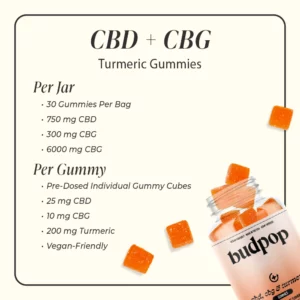
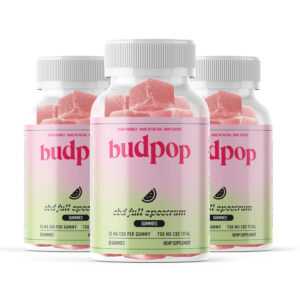
Their standard 25 mg Delta-9 gummies run around $45 to $55 for a 20-count ($0.09 to $0.11 per mg). Every batch has a published COA. US-grown hemp. No proprietary blends that obscure the THC content.
The business model is: charge a fair price, prove the product works, and rely on repeat customers. A 30-day money-back guarantee backs it. That structure only works if the product is consistent, which is why brands that offer it tend to be among the better-quality options in any category.
Other brands worth comparing in this tier: Koi CBD (transparent testing, fair pricing on their Delta-9 line), Exhale Wellness (good potency-to-price ratio on their high-dose products), and Area 52 (particularly strong on the 50 mg and 100 mg end of the market).
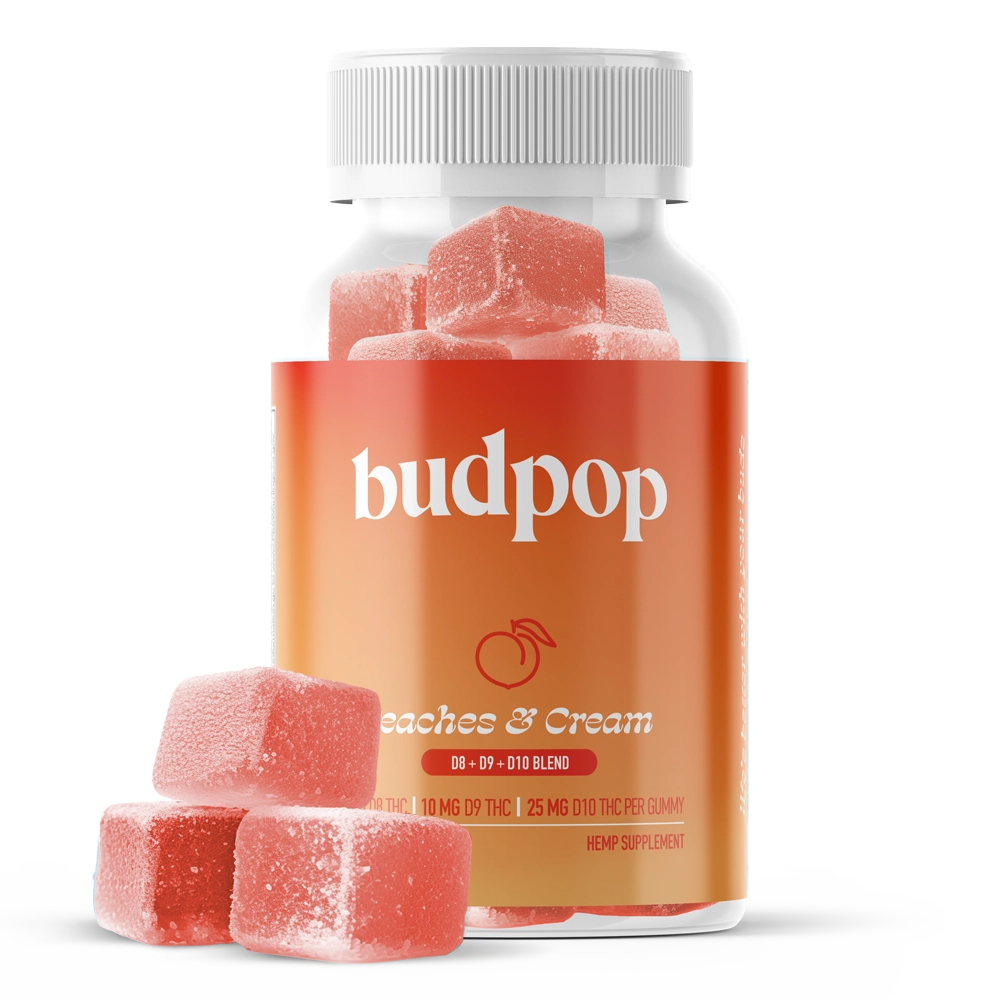
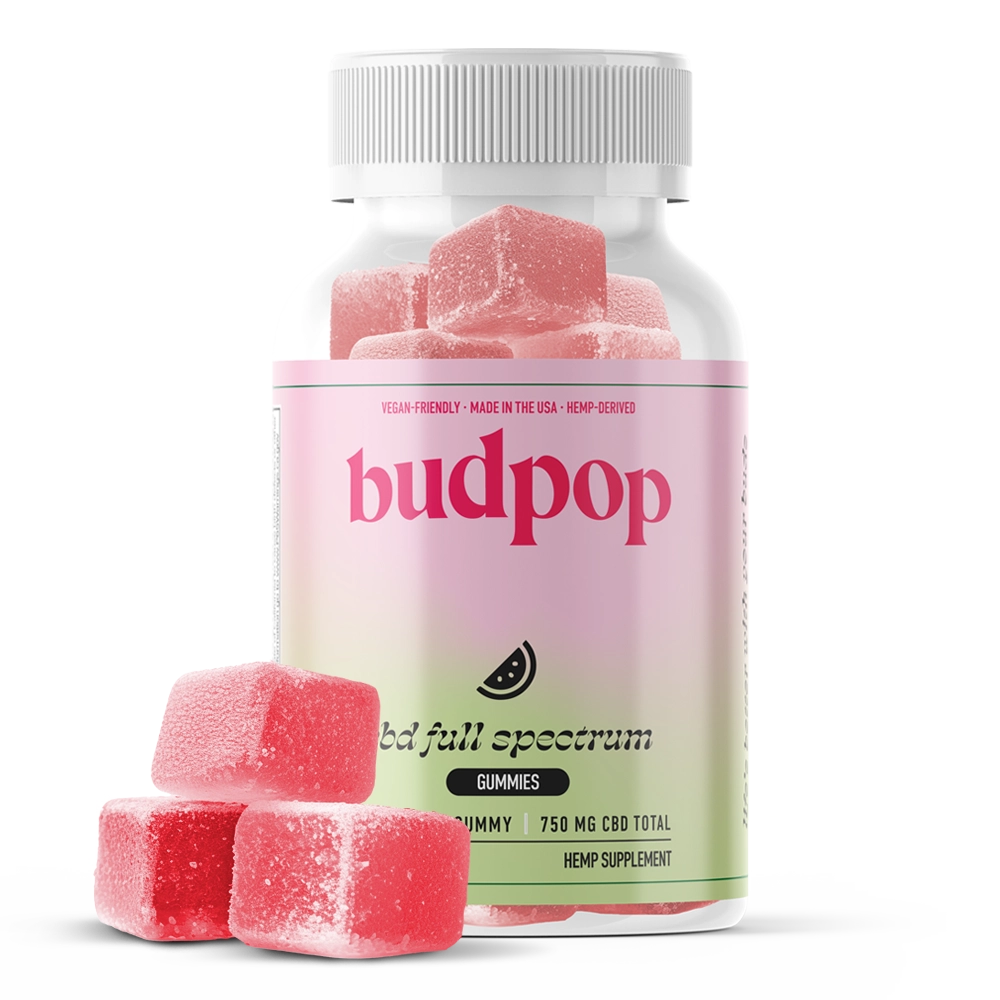
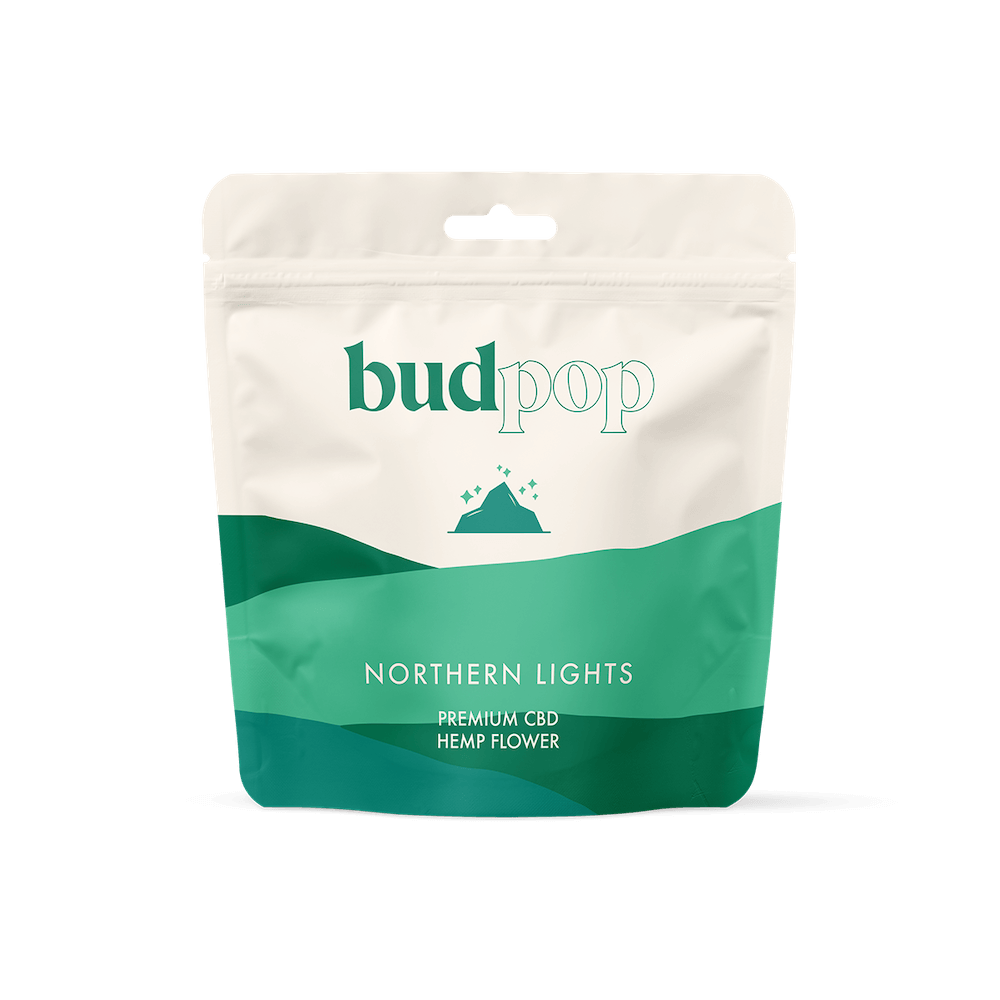
THC RECOVERY PICKS
Feeling Too High From Edibles?
These hemp-derived products are popular for promoting calmer,
smoother, and more manageable THC effects.
Bulk and subscription discounts
Most reputable hemp brands offer two ways to cut cost per mg significantly: buying bundles and subscribing.
Bundles (typically 2 to 4 products bought together) save 15 to 25 percent off individual item pricing. Useful if you’ve tried a product and want to stock up, or if you want to mix potencies.
Subscribe and save programs cut 20 to 30 percent from regular pricing on repeat shipments. Monthly is the most common cadence. Worth using if you’re a regular customer and trust the brand to maintain consistent quality batch to batch.
First-order discounts are also common in this market. Discount codes in the 15 to 25 percent range appear regularly through brand newsletters and affiliate partners. If you haven’t bought from a brand before, searching “[brand name] discount code” before checking out takes 30 seconds and often works.
The caveat on all of this: only subscribe to a brand once you’ve bought a standard order and confirmed the product works for you. Locking into a subscription with an untested product is a way to accumulate a lot of gummies you don’t want.
FAQ
Are hemp gummies as strong as dispensary gummies?
Yes, if the mg per piece is the same. Delta-9 THC derived from hemp and Delta-9 THC from a cannabis plant are the same molecule. The legal difference is source, not effect. A 10 mg hemp Delta-9 gummy will hit comparably to a 10 mg dispensary Delta-9 gummy.
Why are some gummies on Amazon so cheap?
Amazon prohibits THC products. Anything labeled “hemp gummies” on Amazon is CBD-only or labeled in a way that obscures the actual content. If you’re seeing a 30-count “THC” product for $12 on Amazon, it either contains no meaningful THC or the label is misleading.
Is it worth buying in bulk?
Yes, if you’re a regular user and trust the brand. Bulk purchases from reputable brands typically cut cost per mg by 20 to 35 percent. The risk is that you’re committing to a large quantity of a product before knowing if the batch is consistent. Start with a standard order, then go bulk once you know the product works for you.
What’s a COA and why does it matter for price?
COA stands for Certificate of Analysis. It’s a lab report from a third-party testing facility that confirms the product contains what the label says it does. Brands that publish COAs spend more on testing, which raises their cost and their price. That premium is real protection. A gummy without a COA has no independent verification of its potency or purity
Can I find good THC gummies under $30?
Yes. Some legitimate brands sell 10-count, 10 mg gummies (100 mg total) in the $20 to $28 range, especially with a first-order discount. The per-mg math still works out to a fair price. Look for COAs, US-grown hemp, and no proprietary ingredient blends that obscure the actual cannabinoid content.