Fact-Checked by: BudPop Editorial Team, Cannabis Industry Specialists
Disclaimer: This article is for informational purposes only and does not constitute medical advice. Hemp-derived cannabinoids have not been approved by the FDA for the treatment of any medical condition. Consult a healthcare professional before using any cannabinoid product, especially if you take prescription medications, are pregnant, or have a medical condition.
Legal Notice: Hemp-derived cannabinoids (Delta-9 THC, CBN, CBG) are legal under the 2018 Farm Bill when containing less than 0.3% THC by dry weight. Laws vary by state. Verify local regulations before purchasing. You must be 21+ to purchase these products in most US states.
CBN was the first cannabinoid ever isolated from the cannabis plant. That was in 1896. Scientists wouldn’t identify THC for another 68 years.
For over a century, CBN sat in the background while THC and CBD took all the attention. That’s changing fast. The sleep supplement market has latched onto CBN because of something cannabis users have known for generations: old weed makes you sleepier. CBN is the reason why.
But here’s what most CBN articles won’t tell you. The research on CBN alone is mixed. One of the most-cited studies from 1975 found CBN by itself had “little to no effect on sleepiness.” The same study found that when CBN was combined with THC, participants got significantly drowsier.
That single finding, replicated and expanded over the last 50 years, is the entire foundation for why modern sleep gummies combine CBN with other cannabinoids rather than selling it as an isolate. And it’s the exact principle behind how we formulated our Dream Gummies.
This article covers everything the other CBN guides leave out: how CBN actually forms, what it does at the receptor level, the metabolite your liver creates that’s twice as potent as CBN itself, what four key studies actually found, and why CBN works best as part of a team.
How CBN Forms: What Happens When THC Gets Old
CBN doesn’t come from the hemp plant the way CBD or THC does. It isn’t produced during the plant’s growth cycle at all.
CBN (cannabinol) forms when THC breaks down. Exposure to oxygen, heat, and UV light over weeks and months causes a structural change in the THC molecule. One bond shifts, creating an additional aromatic ring. That molecular change reduces the compound’s ability to bind to CB1 receptors in your brain by roughly 5 to 10 times compared to THC.
This is why aged cannabis doesn’t get you as high but tends to feel more sedating. The THC has partially converted into CBN. The psychoactive potency drops, but a different kind of effect takes its place.
Modern CBN products don’t rely on aging cannabis for months. Manufacturers extract and isolate CBN from hemp using controlled processes, ensuring consistent potency in every batch. This matters because naturally aged cannabis produces wildly inconsistent CBN levels. Controlled extraction and third-party testing, like the ISO-certified lab reports we publish for every BudPop product, are the only way to guarantee you’re getting the dose on the label.
How CBN Works in Your Body: Receptors, Enzymes, and the Metabolite Nobody Mentions
CBN interacts with your endocannabinoid system, a network of receptors that regulates sleep, mood, appetite, and pain. Two receptors matter most.
CB1 receptors are concentrated in the brain and central nervous system. When CBN activates them, the result is physical sedation and relaxation. But CBN is a partial agonist at CB1 with a binding affinity (Ki = 211.2 nM) that is 5 to 10 times weaker than THC’s. This is why CBN produces calm without the cognitive alteration or “high” that higher-dose THC creates.
CB2 receptors are found primarily on immune cells throughout the body. CBN’s activity here may contribute to its reported anti-inflammatory effects, though the research on this is still early.
Here’s where it gets interesting, and where almost every other CBN article stops short.
When you swallow a CBN gummy, your liver processes it through a set of enzymes called CYP450, specifically the isoforms 2C9 and 3A4. During this process, a hydroxylation reaction converts CBN into a metabolite called 11-OH-CBN. According to research published in Neuropsychopharmacology (Nature, 2024), this metabolite is approximately twice as potent as CBN itself at activating CB1 receptors in the brain.
In other words, CBN’s sleep effects may be driven more by what your body converts it into than by the original compound. This has real implications for dosing: the amount of 11-OH-CBN your liver produces depends on your individual metabolism, which is why the same dose of CBN can affect two people differently.
There’s a practical problem here too. Because CBN passes through the liver before reaching your bloodstream (a process called first-pass metabolism), oral bioavailability is low, somewhere between 6% and 20%. Most of what you swallow gets broken down before it can do anything.
This is exactly why we use nano-formulated CBN in our Dream Gummies. Nano-emulsion breaks CBN into particles 25 to 100 nanometers wide, small enough to pass through the intestinal wall more efficiently before first-pass metabolism destroys them. The result is faster onset (30 to 45 minutes vs 60 to 90 for standard gummies) and more of the active compound actually reaching your system.
A note on drug interactions: CYP450 2C9 and 3A4 are the same enzymes that metabolize warfarin, certain statins, and some antidepressants. If you take any prescription medication, talk to your doctor before adding CBN to your routine. This isn’t a formality. It’s a real pharmacological concern.
What 4 Studies Actually Found About CBN and Sleep
Most CBN articles either cherry-pick one positive finding or vaguely say “more research is needed.” Here’s what the studies actually show, in plain language, with the limitations included.
Study 1: The 1975 Combination Study
Researchers gave volunteers CBN alone, THC alone, and CBN combined with THC. CBN by itself produced little to no sedative effect. THC alone shortened sleep onset. But the combination of CBN and THC made participants significantly drowsier than either compound alone.
What this means: CBN is not a standalone sedative. It’s a synergy compound. It amplifies the sleep-promoting effects of THC. This 50-year-old finding is still the scientific basis for every THC+CBN sleep gummy on the market today.
Study 2: The 2023 Placebo-Controlled Trial (Bonn-Miller et al., N=293)
This double-blind study gave 293 participants 20mg of CBN nightly for seven consecutive nights. Compared to placebo, the CBN group experienced reduced nighttime awakenings and lower overall sleep disturbance. Critically, there was no increase in daytime fatigue, meaning no morning grogginess.
The study also tested adding CBD to CBN at doses of 10mg, 20mg, and 100mg. None of the CBD additions improved CBN’s sleep effects. This is a significant finding that contradicts what many “CBD+CBN” sleep products imply.
What this means: 20mg appears to be an effective dose for reducing nighttime wake-ups. CBD does not enhance CBN’s sleep benefits. And unlike melatonin, CBN did not produce next-day drowsiness.
Study 3: The 2024 Sleep Architecture Study (Arnold et al., Neuropsychopharmacology)
This was a milestone. Published in Nature’s Neuropsychopharmacology, it was the first study to measure CBN’s effects on actual sleep stages using polysomnography (brain wave monitoring) rather than relying on self-reports.
The findings in rats: CBN increased total sleep time. It increased both NREM (deep sleep) and REM (dream sleep). Most prescription sleep aids and even melatonin do not increase REM; many actually suppress it. CBN’s ability to enhance both phases of sleep makes it pharmacologically distinct.
The study also revealed the biphasic effect: CBN initially suppressed sleep for a short period before producing a dramatic increase. If you’ve taken a CBN gummy and felt alert for the first 20 minutes before relaxation hit, this is likely why.
What this means: CBN doesn’t just help you fall asleep. Emerging evidence suggests it may improve the quality of sleep by supporting both deep sleep and REM stages. The biphasic onset explains why patience matters during the first 30 minutes after taking it.
Study 4: The 2025 Sleep Meta-Analysis (Sleep Medicine Reviews, 1,000+ Participants)
A meta-analysis published in December 2025 pooled data from over 1,000 participants across multiple cannabis sleep studies. The finding was clear: sleep benefits were driven specifically by formulations containing THC and/or CBN. CBD-only products showed no significant effects on sleep outcomes.
What this means: If you’re buying a sleep gummy with only CBD, the largest body of evidence available suggests it won’t meaningfully improve your sleep. The compounds that move the needle are THC and CBN, especially together.
Why CBN Alone Often Disappoints (And Why That’s Actually the Point)
The Sleep Foundation, GoodRx, and a 2021 review in Cannabis and Cannabinoid Research all note that CBN’s evidence as a standalone sleep aid is limited. They’re correct. The 1975 study showed it. The Bonn-Miller study showed a modest effect at 20mg but not a dramatic one.
This isn’t a flaw in CBN. It’s a design principle for how to use it.
CBN works best as part of a combination. The 1975 study proved CBN+THC produces stronger sedation than either alone. The 2025 meta-analysis confirmed multi-cannabinoid formulas drive better sleep outcomes than single compounds. Every leading sleep gummy brand in 2026, from Slumber (CBN+THC+CBD) to Feals (CBN+CBD+THC) to Sunday Scaries (CBN+THC+botanicals), uses a combination formula for this exact reason.
When we formulated BudPop’s Dream Gummies, we took the combination approach one step further. Most brands combine CBN with other cannabinoids that all work through the same endocannabinoid system. We added blue lotus (Nymphaea caerulea), a botanical that works through an entirely different set of receptors: dopamine and serotonin pathways.
The result is a three-pathway formula:
- CBN (10mg nano) sedates the body through CB1 receptor activation
- Blue Lotus (300mg extract) calms the mind through dopamine and serotonin modulation
- D9 THC (2mg nano) quiets racing thoughts at a sub-psychoactive microdose
- CBG (10mg) promotes muscular relaxation and nervous system calm
Each ingredient has a specific job. None of them overlap. And together they address both halves of insomnia that most sleep aids miss: the racing mind AND the restless body.
One of our long-term customers, Diane Richardson, described the experience simply after more than a year of nightly use: “They are the best if you can’t sleep.” Another customer who struggles with insomnia and works early shifts said: “I go to sleep within an hour and I always wake up well rested.”
We also hear from people who need more. One reviewer noted she wakes at 3 AM and takes a second gummy. Individual response varies, and we think being upfront about that matters more than pretending every customer has an identical experience.
CBN vs Melatonin: Two Fundamentally Different Approaches
GoodRx’s CBN article concludes that “melatonin is probably a safer option.” They have a point about the depth of research behind melatonin. But they leave out the other side of the comparison.
Melatonin is a hormone. When you take it as a supplement, your pineal gland gradually reduces its own melatonin production. Within three to six months of nightly use, many people need higher doses to get the same effect. A 2023 JAMA study found that melatonin supplements contain an average of 347% more of the hormone than what’s listed on the label, compounding the dose escalation problem.
Melatonin’s half-life is roughly four to five hours. This is why melatonin users disproportionately report waking between 2 AM and 4 AM: the melatonin has worn off, and cortisol is beginning its natural pre-dawn rise. With nothing holding sleep in place, you wake up.
CBN works through a completely different mechanism. It activates CB1 receptors in the endocannabinoid system. No hormones are involved. No circadian clock override. No documented tolerance buildup in the existing research. And the Bonn-Miller study specifically confirmed that CBN produced no increase in next-day fatigue, the single most common complaint about melatonin.
| Factor | CBN | Melatonin |
|---|---|---|
| Mechanism | Endocannabinoid (CB1) | Hormonal (circadian signal) |
| Tolerance documented | Not yet | Yes (3-6 months) |
| Morning grogginess | Not observed (Bonn-Miller 2023) | Most common complaint |
| REM sleep | May enhance (Arnold 2024) | No REM effect |
| Effective duration | Longer (half-life 32 hrs avg) | 4-5 hours |
| Labeling accuracy | Varies by brand | 347% over-labeled (JAMA 2023) |
| Drug test risk | Possible (structural similarity to THC) | None |
| Cost per night | Higher | Lower |
| Research depth | Emerging | Extensive |
Neither option is perfect. Melatonin is cheaper and better studied. CBN avoids the hormonal interference and morning grogginess that drive many people away from melatonin after months of use.
This is exactly why we formulated Dream Gummies without melatonin. Not because melatonin is bad, but because a non-hormonal approach avoids the tolerance cycle that makes melatonin less effective over time.
Dosing: What the Research Suggests and What We Recommend
No regulatory body has established an official CBN dose. But the research gives us useful data points.
The Bonn-Miller study used 20mg nightly and found reduced sleep disturbance. The upcoming CUPID clinical trial (the first proper human insomnia trial using polysomnography) is testing 30mg and 300mg doses. Historical safety studies from the 1970s and 80s used doses up to 1,200mg daily for a month with no notable safety concerns.
Current products on the market range from 5mg to 30mg of CBN per serving. BudPop’s Dream Gummies contain 10mg of nano-formulated CBN per gummy. Nano-formulation increases the amount of CBN that actually reaches your bloodstream, so 10mg nano may deliver effects comparable to 15 to 20mg of standard CBN.
| Experience Level | Suggested Dose | What to Expect |
|---|---|---|
| First-time | Half a gummy (5mg nano CBN) | Mild relaxation, subtle calm |
| Standard | One gummy (10mg nano CBN) | Noticeable relaxation, sleep support |
| Higher tolerance | 1-2 gummies (10-20mg nano CBN) | Deeper sedation, extended sleep |
Start with half a gummy and wait at least 45 minutes before deciding if you need more. The nano formulation kicks in faster than standard gummies, but “faster” still means 30 to 45 minutes, not 5 minutes.
Safety, Drug Tests, and Who Should Skip CBN
Drug tests: CBN is structurally similar to THC. A 2020 study in the Journal of Applied Laboratory Medicine (Kroner et al.) found that CBN cross-reacted with two immunoassays designed to detect THC metabolites. Dream Gummies also contain 2mg of Delta-9 THC, which will trigger a standard drug test if used regularly.
Safety data: Historical studies used doses up to 1,200mg daily for approximately a month with no reported safety concerns. Current products use 5 to 30mg. The safety margin is wide. The Bonn-Miller trial reported no significant adverse effects at 20mg nightly for seven days.
Who should avoid CBN: Anyone pregnant or breastfeeding (insufficient safety data). Anyone taking medications metabolized by CYP450 2C9 or 3A4 enzymes (including warfarin, certain statins, and some SSRIs) without first consulting a doctor. Anyone under 21.
What’s Coming Next: The CUPID Trial
Most CBN research so far has relied on self-reported sleep quality or animal models. The CUPID trial is changing that. It’s a randomized, double-blind, placebo-controlled study testing 30mg and 300mg CBN in 20 participants with clinician-diagnosed insomnia, using polysomnography to measure actual sleep stages.
If the results are positive, CBN moves from “promising but under-researched” to “clinically validated.” If they’re mixed, the data will still clarify optimal dosing and identify which types of sleep problems CBN addresses best. Either way, the CUPID trial will produce the most rigorous human CBN sleep data ever collected.
How We Use CBN in Dream Gummies
Every design decision in the Dream Gummies formula connects back to what the research supports.
The 1975 study showed CBN works better with THC. So we included 2mg of nano Delta-9 THC, a microdose that quiets the mind without producing a high or suppressing REM sleep. The 2025 meta-analysis confirmed multi-cannabinoid formulas outperform isolates. So we added CBG (10mg) for muscular relaxation and nervous system support.
And then we did something no other brand has done: we added 300mg of blue lotus extract, a botanical that works through dopamine and serotonin receptors, completely outside the endocannabinoid system. This gives the formula a third biological pathway for promoting sleep, something pure cannabinoid products can’t replicate.
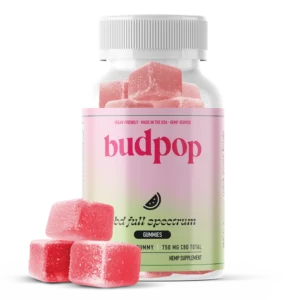
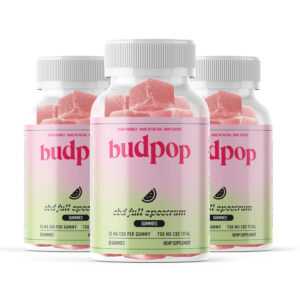
The entire formula is nano-formulated for faster absorption, melatonin-free by design, vegan (pectin-based, no gelatin), and third-party tested with COAs accessible via QR code on every jar. BudPop’s potency variance across batches is 2.1%, compared to an industry average of 15 to 23% for spray-applied gummies.
If CBN’s research trajectory continues in the direction the last four studies point, it may become the most important cannabinoid in the sleep category. But even now, with the evidence still emerging, the principle is clear: CBN works. It just works best when it isn’t working alone.
Try Dream Gummies with a 30-day money-back guarantee. Subscribe and save up to 30%.
Frequently Asked Questions
Is CBN legal? Yes. Hemp-derived CBN is federally legal under the 2018 Farm Bill when the total product contains less than 0.3% Delta-9 THC by dry weight. State laws vary, so check your local regulations before purchasing.
Does CBN get you high? At standard doses (5 to 30mg), no. CBN is 5 to 10 times weaker than THC at CB1 receptors. You may feel relaxed and drowsy, but not intoxicated. Very high doses (200mg+) could theoretically produce mild psychoactive effects, but no commercial product contains anywhere near that amount.
How long does CBN take to work? Standard CBN gummies typically take 60 to 90 minutes. Nano-formulated CBN (like Dream Gummies) typically kicks in within 30 to 45 minutes due to smaller particle sizes and faster absorption.
Will CBN show up on a drug test? Possibly. CBN is structurally similar to THC and has shown cross-reactivity with some immunoassay drug tests. Products containing any amount of Delta-9 THC (including Dream Gummies’ 2mg) will likely trigger a positive test with regular use.
Can I take CBN every night? Historical studies used doses up to 1,200mg daily for a month with no safety concerns. Current products use 5 to 30mg. No tolerance buildup has been documented in the existing research. However, long-term human studies are still limited.
Is CBN better than melatonin? They work differently. Melatonin is a hormone that signals circadian timing. CBN activates endocannabinoid receptors for physical sedation. CBN avoids the tolerance buildup and morning grogginess associated with melatonin, but melatonin has a deeper body of research. The choice depends on your specific sleep problem and what you’ve tried before.
Does CBD help CBN work better? The Bonn-Miller 2023 study tested CBN with CBD at 10mg, 20mg, and 100mg doses. Adding CBD did not improve CBN’s sleep effects. THC, on the other hand, has been shown to enhance CBN’s sedative properties since the original 1975 study.
What dose of CBN should I start with? Start with 5 to 10mg. The Bonn-Miller study used 20mg as its effective dose. With nano-formulated CBN, lower doses may produce comparable effects due to improved bioavailability. Wait at least 45 minutes before taking more.
FDA DISCLOSURE: The statements regarding these products have not been evaluated by the Food and Drug Administration. These products are not intended to diagnose, treat, cure, or prevent any disease. Consult your health physician before use.