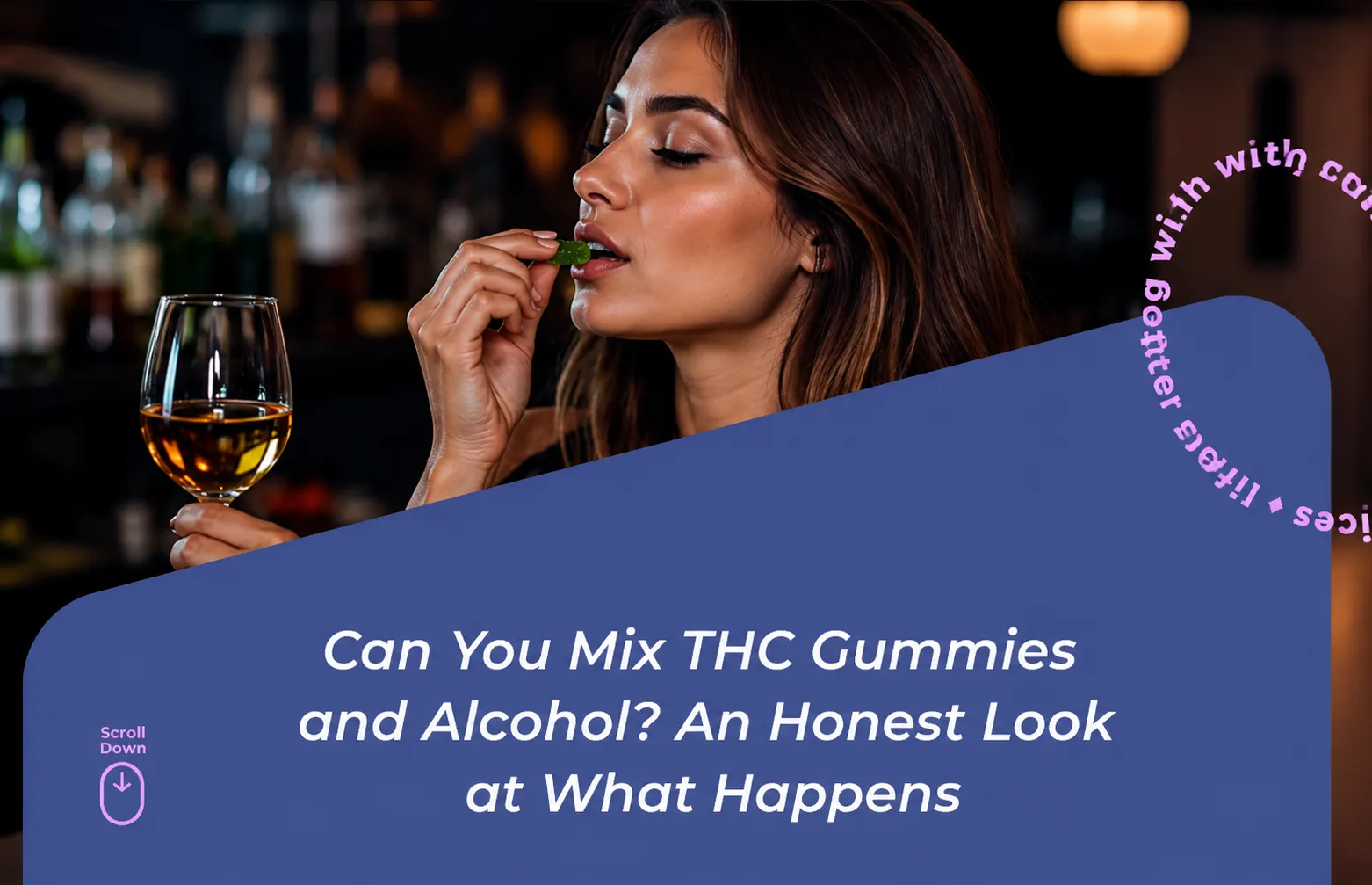
Yes you can, but the combination amplifies both substances and increases the risk of nausea, dizziness, and a rough next morning. Alcohol speeds THC absorption, and THC suppresses the body’s vomit reflex, which makes alcohol poisoning harder to detect. If you’re going to combine, drink first, gummy second, and stop drinking after the gummy kicks in.
What happens in your body when you mix THC gummies and alcohol
Both THC and alcohol are psychoactive compounds that slow the central nervous system. Combined, they don’t just add together. They interact.
Alcohol increases the permeability of the gut lining, which speeds up THC absorption into the bloodstream. A 2009 study published in Clinical Chemistry found that blood plasma THC concentrations were significantly higher when participants consumed alcohol before THC compared to THC alone. The same dose of THC hits harder and faster in the presence of alcohol.
THC, for its part, modulates the endocannabinoid system in ways that amplify the sedating and disorienting effects of alcohol. The combination produces more dizziness, stronger perceptual shifts, and more pronounced cognitive impairment than either substance does at the same dose separately.
The result people describe most often: two drinks and a 5 mg gummy can feel like five drinks. The math doesn’t work the way most people expect going in.
Why the order matters: drink first vs gummy first
The sequence you take them in changes the experience significantly.
Drink first, gummy second: you know where you are with the alcohol before the THC adds to it. The gummy onset is slower than a drink, so you have a window to calibrate. You feel the alcohol, then the gummy fades in on top. More predictable.
Gummy first, drink second: the gummy’s slow onset means you may not feel it yet when you start drinking. Then both kick in at the same time, usually harder than expected. This is the sequence behind most bad crossfading experiences. The alcohol accelerates the THC absorption just as the gummy hits its own natural onset window.
The drink-first sequence is the more controllable one. You can decide how many drinks you’ve had before adding the gummy, and you can stop drinking once the gummy starts working.
Why alcohol amplifies THC effects (greenout science)
A greenout is cannabis overconsumption, usually combined with alcohol. The name comes from the pallor people sometimes develop. The experience: intense spinning, nausea, sweating, sometimes full-body trembling, and a sense that the room won’t stop moving.
The mechanism behind alcohol’s amplifying effect runs through the gut. Ethanol increases intestinal permeability, and THC’s fat-soluble particles absorb more readily through a permeable gut lining than a normal one. The result is a spike in blood plasma THC levels beyond what the same dose produces without alcohol.
For gummies specifically, this matters more than for smoked or vaped THC. Ingested THC goes through the liver and produces 11-hydroxy-THC, a metabolite that’s more potent than THC itself. Alcohol, accelerating the absorption of that full liver-processed dose, is what sends some people over the edge.
At 5 mg, the amplification is manageable for most people. At 10 mg or higher, the same amplification can produce an experience that lasts 4 to 6 uncomfortable hours.
The hidden danger: suppressed vomit reflex
This is the part most social guides skip.
Your body’s vomit reflex is a safety mechanism. When you drink too much, vomiting expels the unabsorbed alcohol from your stomach before it all enters the bloodstream. It’s uncomfortable, but it’s protective.
THC suppresses the vomit reflex through the endocannabinoid system. Specifically, cannabinoids act on CB1 receptors in the brainstem area that controls nausea and vomiting, reducing the signal that would normally trigger it.
The combination means: you can drink past the point your body would normally correct, without the warning signal that something is wrong. Alcohol poisoning becomes harder to detect from the inside. You feel nauseous (THC doesn’t eliminate nausea, it just suppresses the reflex) but you don’t vomit, and you may keep drinking.
This is the most serious risk in the combination. It’s why having someone sober present matters, and why stopping alcohol intake once the gummy kicks in is the safest practice.
Smart combo rules if you’re going to do it
| Rule | Why it matters |
| Dose the gummy low | Half your normal dose. The alcohol multiplies the effect. A 5 mg gummy at a party with 2 drinks can hit like a 15 to 20 mg solo session. |
| Drink first, gummy second | Let the alcohol settle before adding THC. The alcohol-first sequence gives you more control over the combined state. Gummy-first with drinking added on top is the reliable path to a bad night. |
| Stop drinking when the gummy kicks in | Once the gummy starts working (45 to 90 minutes in), put down the drink. Adding more alcohol after the THC is active dramatically raises greenout risk. |
| Eat a real meal first | Food slows alcohol absorption and makes the combined onset more gradual. Combining on an empty stomach amplifies both substances faster than most people expect. |
| Have a sober person nearby | If you’re experimenting with the combination for the first time, have someone around who isn’t doing both. The vomit reflex suppression point is real, and someone needs to be present who can respond if things go sideways. |
| Know your exit | Have somewhere quiet and comfortable to go if you need to lie down. A stimulating environment (loud music, crowds, bright lights) makes a bad combo experience significantly worse. |
These rules are calibrated for someone who’s done both before and knows their baseline tolerance for each separately. If you’ve never combined them, treat the first session as an experiment with lower doses than you’d normally use for either substance alone.
The smarter move: swap the alcohol for a THC seltzer
THC seltzers are low-dose (usually 2 to 5 mg per can), fast-acting (nano-emulsified, 15 to 30 minute onset), and calorie-comparable to a light beer. They’re designed specifically for social settings where you’d otherwise reach for a drink.
The practical advantage in a party context: you can sip one, feel it within 30 minutes, and stop when you’re where you want to be. It behaves more like a drink than a traditional gummy because the onset is predictable and the dose per can is low enough to adjust incrementally.
You get the social experience of holding a drink and the light psychoactive effect you were looking for, without adding alcohol’s amplification effect and the vomit reflex problem into the equation.
Brands like Cann (2.5 mg per can), Wynk (2.5 to 5 mg per can), and House of Saka produce THC beverages specifically for this use case. Many are available online and in legal states.
For people who genuinely enjoy both and want to combine, the rules table above applies. For people who drink socially and are curious whether a gummy could fill that role instead, a THC seltzer is a cleaner solution than crossfading.
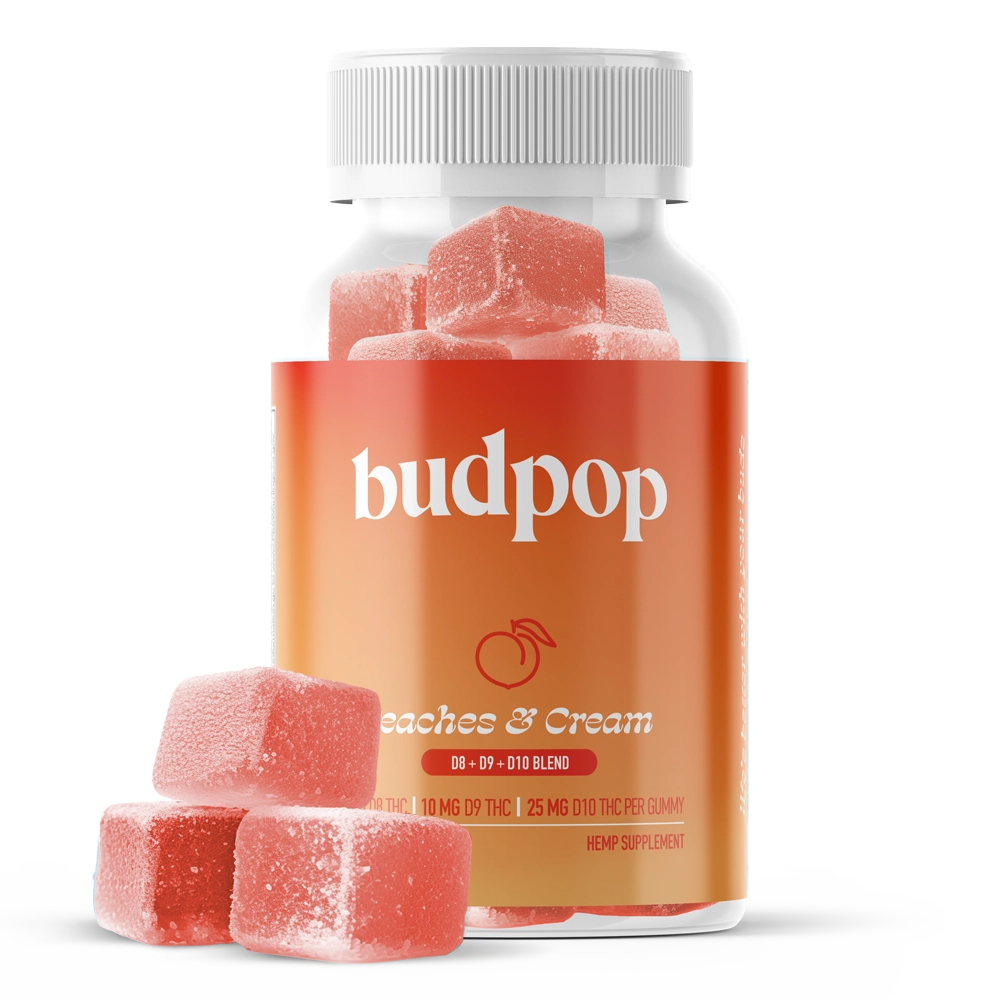
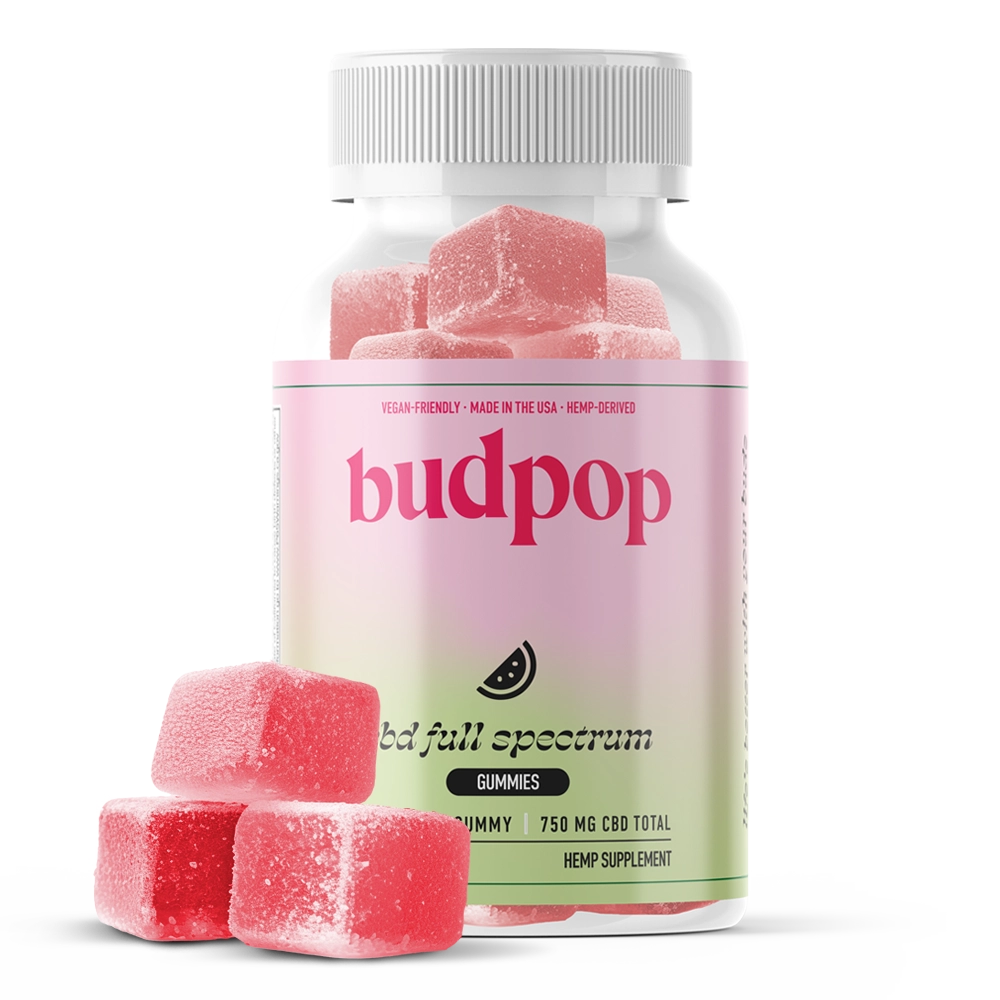
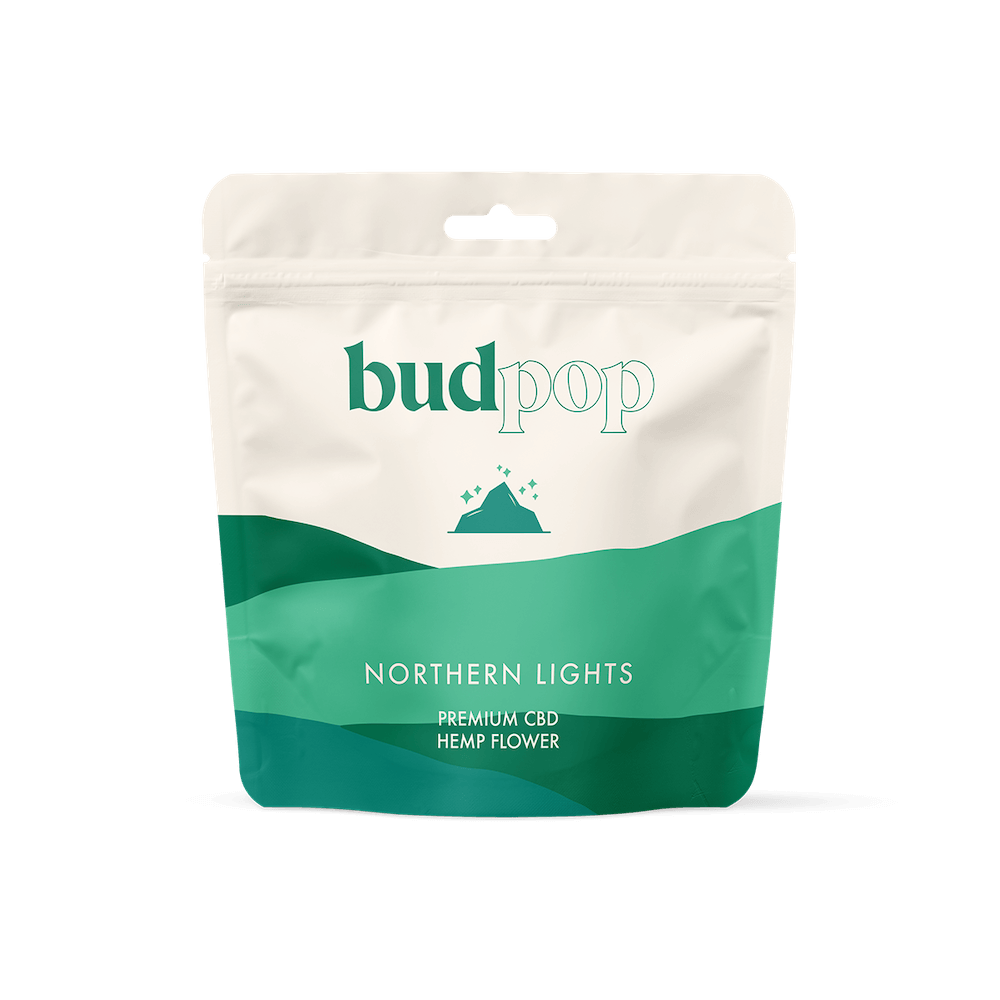
THC RECOVERY PICKS
Feeling Too High From Edibles?
These hemp-derived products are popular for promoting calmer,
smoother, and more manageable THC effects.
FAQ
Is crossfading dangerous?
It can be. The main risks are: a greenout (overwhelming dizziness, nausea, and anxiety that can last hours), and the vomit reflex suppression, making alcohol overconsumption harder to self-regulate. For a healthy adult combining reasonable amounts of both, the outcome is usually just more intense than expected. The danger is real when doses are high, when the combination is unfamiliar, or when no one sober is present.
What’s a greenout?
A greenout is the cannabis-alcohol equivalent of drinking too much. It typically involves intense dizziness, nausea, sweating, and a feeling of spinning that doesn’t stop. Unlike with alcohol alone, where nausea usually resolves through vomiting, THC’s suppression of the vomit reflex can trap someone in the nausea cycle without the relief of getting sick. Lying flat in a dark room, eating something small, and waiting is the best management.
Can I drink the morning after taking a gummy the night before?
Yes, with some caveats. If the gummy was a standard 5 to 10 mg dose and you’re waking up 8 or more hours later, the active effects are gone. Some people feel foggy or residually tired the morning after a higher dose. Alcohol on that residual sedation can feel more potent than usual. A light drink is probably fine; a heavy session while you’re still groggy is asking for a rough day.
Does the type of alcohol matter?
For THC absorption specifically, the ethanol content matters more than the drink type. Higher ABV drinks raise blood plasma THC levels more than low-ABV drinks at comparable volume. A glass of wine and a beer aren’t dramatically different. Shots and high-ABV cocktails on top of a gummy are a faster path to overdoing it.
What if I accidentally took too much of both?
Find somewhere to lie down. Eat something small. Drink water slowly. A cold (not ice-cold) cloth on the forehead helps some people. Tell someone you trust what you took. The experience is temporary and will pass. If someone becomes unresponsive or can’t be woken, that’s a 911 situation regardless of what was involved.
Does THC make you more likely to become an alcoholic?
There’s no clear evidence that cannabis use causes alcohol dependency. Some research suggests substitution effects, where people reduce alcohol consumption when using cannabis. The relationship is complex and individual. If you’re concerned about your drinking or use patterns, that’s a conversation for a doctor, not a gummy label.